

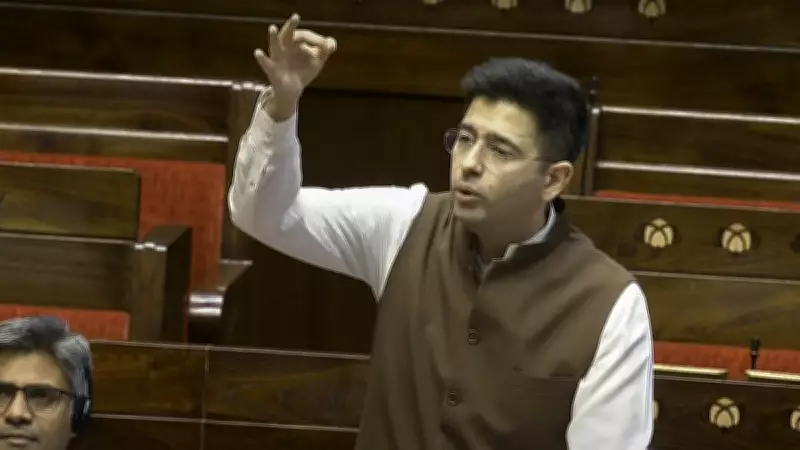
Raghav Chadha Fires Back at AAP Leadership Following Rajya Sabha Setback
In a dramatic turn of events, Aam Aadmi Party (AAP) leader Raghav Chadha has launched a scathing attack on his own party after being demoted from his position in the Rajya Sabha. The development has sent shockwaves through Indian political circles, highlighting internal tensions within the Delhi-based party.
'Silenced, Not Defeated': Chadha's Defiant Stance
Taking to social media platform X (formerly Twitter), Chadha posted a powerful message in both English and Hindi that read: 'Silenced, not defeated. My message to the 'aam aadmi'—खामोश करवाया गया हूँ, हारा नहीं हूँ'. The post, shared on April 3, 2026, immediately went viral, drawing attention to what appears to be a significant rift within AAP's leadership structure.
The crux of Chadha's argument centers on his parliamentary work. In subsequent statements, the young parliamentarian pointedly asked: 'I raised several issues that benefited aam aadmi (common man). What harm did that cause the Aam Aadmi Party?' This rhetorical question underscores his belief that his demotion stems not from poor performance, but from his vocal advocacy on behalf of ordinary citizens.

Questioning the Demotion: 'Have I Committed Any Crime?'
Chadha's public outburst includes a direct challenge to party leadership. He has openly questioned whether his actions constitute a 'crime' against the party, suggesting that his removal from his Rajya Sabha position represents political punishment rather than organizational restructuring.
The timing of this controversy is particularly significant. As AAP positions itself as a national alternative to established political parties, internal discord could potentially undermine its credibility with voters who value party unity and clear governance principles.
Background and Political Implications
Raghav Chadha has been one of AAP's most visible faces in recent years, known for his articulate defense of party policies and his work on various parliamentary committees. His demotion comes at a time when:
- AAP is expanding its presence beyond Delhi and Punjab
- The party faces increased scrutiny over its governance model
- Internal power dynamics are evolving with the party's growth
Political analysts suggest this public airing of grievances could signal deeper organizational challenges within AAP. The party, which built its identity around transparency and anti-corruption, now faces questions about its internal democratic processes and how it handles dissent among its elected representatives.
Broader Context in Indian Politics
This incident reflects larger patterns in Indian political parties where:
- Young leaders sometimes clash with established party hierarchies
- Public criticism of one's own party remains relatively rare
- Social media has become a platform for intra-party disputes
Chadha's decision to take his grievances public rather than resolving them internally marks a departure from conventional political behavior in India. His emphasis on having worked for the 'common man' directly appeals to AAP's core constituency, potentially putting party leadership in a difficult position regarding how to respond.
As this story develops, all eyes will be on how AAP leadership addresses Chadha's allegations and whether this represents an isolated incident or the beginning of more visible internal divisions within the party that has positioned itself as a clean alternative to traditional politics.






