

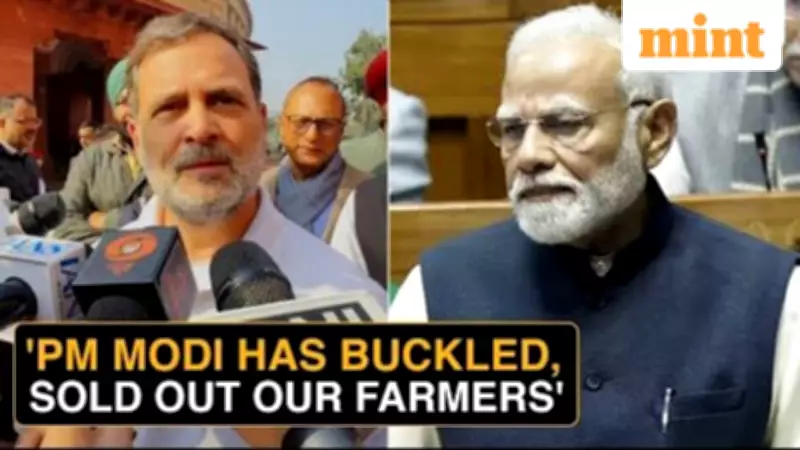
Congress leader Rahul Gandhi has launched a scathing attack on Prime Minister Narendra Modi over the recently finalized India-United States trade agreement, accusing the government of buckling under international pressure and betraying the interests of Indian farmers. In his first public reaction to what some are calling the "Mother of All Trade Deals," Gandhi claimed the Prime Minister has effectively "sold out" the agricultural community.
Trade Deal Controversy Escalates Political Tensions
The opposition leader's sharp criticism comes amid growing concerns about the terms of the bilateral trade pact between India and the United States. Gandhi asserted that the sudden finalization of the agreement demonstrates how the Modi administration has capitulated to external demands, potentially compromising the hard work and livelihoods of millions of farmers across the country.
Parliamentary Proceedings Disrupted for Second Consecutive Day
The political row has spilled over into parliamentary proceedings, with opposition protests disrupting the Lok Sabha for the second straight day. The controversy intensified when Rahul Gandhi was reportedly denied the opportunity to speak about the trade deal during discussions related to the President's address to Parliament.

"This marks the first time a Leader of Opposition has not been permitted to speak on the President's address," Gandhi stated, highlighting what he views as an unprecedented suppression of parliamentary democracy. The denial of his speech rights has further fueled the ongoing confrontation between the government and opposition parties.
Broader Implications for India's Trade Policy
The India-US trade agreement represents one of the most significant economic partnerships in recent years, but Gandhi's criticism raises important questions about its potential impact on domestic agricultural sectors. The Congress leader's allegations suggest that the government may have made concessions that could adversely affect farmer incomes and food security.
Political analysts note that this controversy emerges against the backdrop of previous trade negotiations, including the India-EU trade deal that also faced criticism from opposition parties. The current dispute underscores the delicate balance between pursuing international trade opportunities and protecting domestic economic interests.
As Parliament remains deadlocked over the issue, the government faces mounting pressure to address concerns about transparency in trade negotiations and their consequences for India's agricultural community. The ongoing disruption of parliamentary proceedings indicates that this trade deal controversy is likely to remain a focal point of political debate in the coming weeks.






