

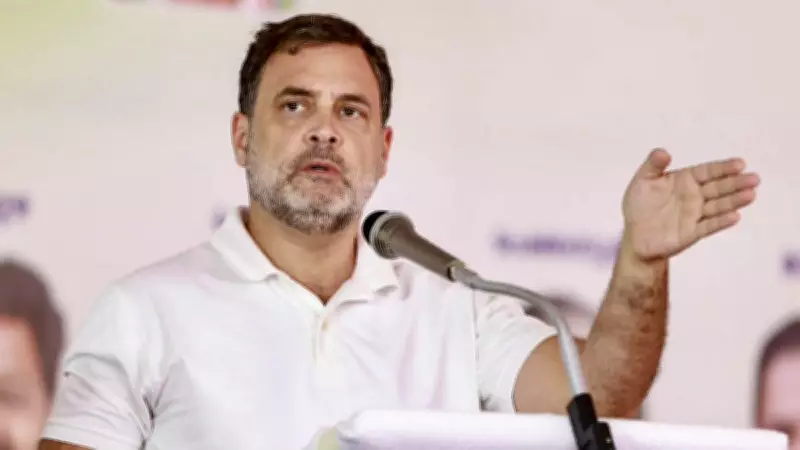
Rahul Gandhi Accuses Modi Government of Concealing Foreign Surveillance Threat
Congress leader Rahul Gandhi has launched a sharp critique against the Narendra Modi-led government, alleging that it is deliberately hiding the reality of foreign surveillance activities targeting India. In a statement that has stirred political debate, Gandhi claimed this concealment poses a significant security risk to every Indian citizen.
Allegations of Security Compromise
Gandhi asserted that the Modi administration is putting the security of the nation at grave risk by attempting to cover up its own failures in addressing foreign surveillance. He emphasized that this lack of transparency not only undermines public trust but also leaves citizens vulnerable to potential threats from external actors.
The opposition leader highlighted that the government's actions are effectively concealing the harsh reality of how foreign entities might be monitoring Indian communications and data. This, according to Gandhi, represents a critical failure in governance that demands immediate attention and accountability.

Political Implications and Responses
The allegations come at a time when national security remains a top priority for the Indian government. Gandhi's statements have sparked discussions about:
- The need for greater transparency in security matters
- Potential vulnerabilities in India's digital infrastructure
- The government's responsibility to protect citizen data
- Political accountability for security lapses
While the government has yet to issue an official response to these specific allegations, the issue touches on broader concerns about cybersecurity and foreign interference that have been raised by various experts and opposition parties in recent years.
Broader Context of Surveillance Concerns
India has faced increasing challenges in the digital security domain, with reports occasionally surfacing about attempted cyber intrusions and surveillance activities by foreign state and non-state actors. The government has implemented several measures to strengthen cybersecurity frameworks, but critics argue that more needs to be done to ensure comprehensive protection.
Gandhi's remarks underscore the ongoing tension between national security requirements and the public's right to information about potential threats. As technology evolves and surveillance capabilities become more sophisticated, this debate is likely to intensify in the coming months.
The Congress leader's intervention brings the issue of foreign surveillance back into political focus, potentially influencing discussions in Parliament and among policy makers about how best to safeguard India's digital sovereignty while maintaining transparency with citizens.






