

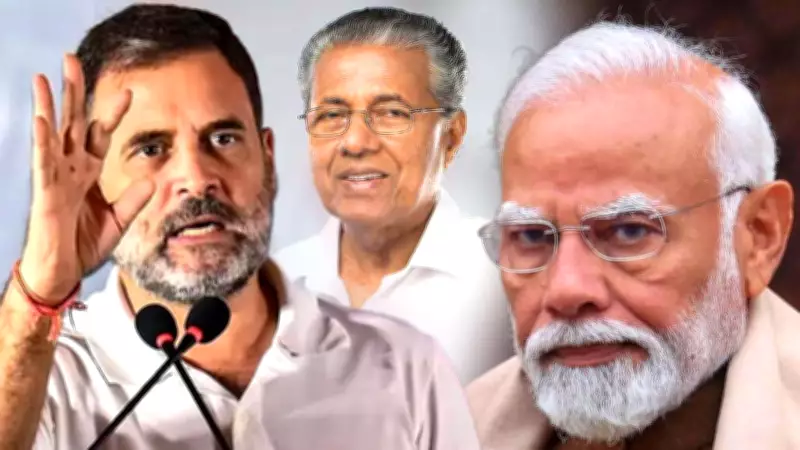
Rahul Gandhi Launches Scathing Attack on PM Modi Over Alleged Trump Influence
In a dramatic political rally held in Pathanamthitta, Kerala, Lok Sabha Leader of the Opposition Rahul Gandhi delivered a blistering critique of Prime Minister Narendra Modi, making explosive allegations that have sent shockwaves through the political landscape. Gandhi claimed that Prime Minister Modi is "compromised" by former United States President Donald Trump, raising serious questions about India's sovereignty and independent decision-making capabilities.
Allegations of Foreign Influence and Sovereignty Concerns
Gandhi's speech focused heavily on what he described as detrimental agreements between India and the United States. The Congress leader asserted that recent bilateral deals have effectively handed over control of India's crucial agricultural sector to American farmers, potentially jeopardizing the livelihoods of millions of Indian agricultural workers. Furthermore, he argued that these arrangements have significantly weakened India's energy security by limiting the country's options for oil procurement on the global market.
The opposition leader went further by referencing what he called "sensitive files" that allegedly demonstrate the extent of Trump's influence over Modi's administration. Gandhi painted a picture of a prime minister who has been publicly humiliated by the former U.S. president and remains vulnerable to having his political career "destroyed anytime" at Trump's discretion.

Timing and Political Implications
These incendiary remarks come at a critical juncture ahead of key elections, reflecting the opposition's strategic focus on questioning Modi's governance approach and international alignments. Gandhi's allegations touch upon several fundamental concerns:
- National sovereignty and independent foreign policy formulation
- Protection of domestic agricultural interests against foreign competition
- Energy security and strategic autonomy in resource procurement
- The nature of India's relationship with global powers, particularly the United States
The speech represents a significant escalation in political rhetoric, with Gandhi directly challenging the prime minister's ability to safeguard India's national interests against what he portrays as overwhelming foreign influence. The allegations suggest a fundamental conflict between India's domestic priorities and its international commitments under the current administration.
Broader Context of India-US Relations
Gandhi's comments must be understood within the complex framework of evolving India-United States relations. While bilateral cooperation has expanded in numerous areas including defense, technology, and trade, Gandhi's allegations highlight potential vulnerabilities in this partnership. His speech raises questions about whether India has maintained sufficient bargaining power in negotiations with a global superpower.
The opposition leader's focus on agricultural and energy sectors is particularly significant, as these represent critical components of India's economy and national security framework. By alleging that these sectors have been compromised through international agreements, Gandhi is attempting to frame the upcoming elections as a referendum on India's economic independence and strategic autonomy.
As political tensions intensify ahead of crucial electoral contests, these allegations are likely to dominate political discourse, forcing all parties to clarify their positions on India's international relationships and domestic policy priorities. The coming weeks will reveal whether Gandhi's explosive claims gain traction with voters concerned about India's position in an increasingly complex global landscape.






