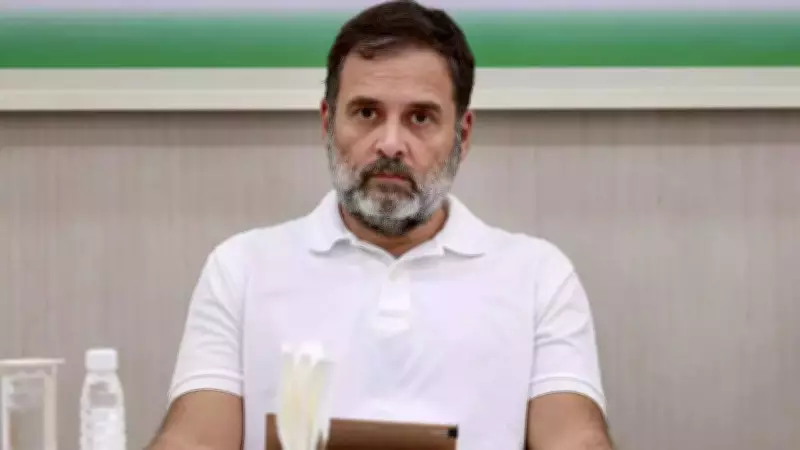
Rahul Gandhi Demands Answers from PM Modi on US Trade Agreement
In a renewed offensive against the India-US trade deal, Congress leader Rahul Gandhi on Sunday posed five pointed questions to Prime Minister Narendra Modi, asserting that farmers deserve transparency regarding potential long-term foreign influence on India's agricultural sector.
Key Concerns Over Agricultural Imports and Future Implications
Rahul Gandhi questioned whether provisions in the interim trade agreement, as outlined in the joint statement, could lead to imports of pulses and grains not explicitly listed. He expressed apprehension that this might establish a precedent allowing the United States to progressively introduce more agricultural items for import into India, effectively opening a door that has remained closed until now.
Impact on Soya Farmers and Price Stability
The Congress MP specifically highlighted the potential consequences for soya farmers in states like Madhya Pradesh, Maharashtra, and Rajasthan. He asked if the import of genetically modified (GM) soya oil from the US would jeopardize their livelihoods and whether Indian farmers could withstand another price shock in an already volatile market.

Clarity Sought on "Additional Products" and Sensitive Crops
Rahul Gandhi urged the Prime Minister to elucidate what constitutes the "additional products" mentioned in the statement for tariff reductions or eliminations. He raised the critical question of whether this signals mounting pressure to open up pulses and other sensitive crops to US imports over time, potentially undermining domestic agricultural security.
Integration of Dairy Chain with US Agricultural System
Referring to the proposed import of distillers dried grains (DDG), the Congress leader questioned whether feeding Indian cattle with this GM corn-based product would effectively integrate India's dairy chain with the US agricultural system, creating dependencies that could affect local dairy farmers and practices.
Non-Tariff Barriers and Policy Dilution
Rahul Gandhi also pressed for clarification on the removal of "non-tariff barriers," asking if this implies India might be compelled to dilute its stance against GM crops, weaken procurement mechanisms, or undermine Minimum Support Price (MSP) and bonuses in the future. He emphasized that such moves could have far-reaching implications for farmer welfare and agricultural policy.
The Congress leader's interrogation underscores growing political scrutiny over the trade deal, with farmers' interests at the forefront of the debate. As discussions continue, these questions highlight the need for detailed governmental responses to ensure agricultural sovereignty and economic stability.