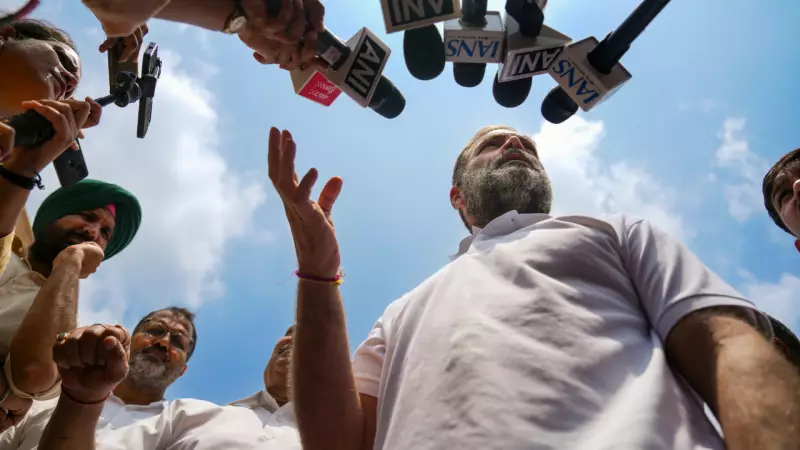
Congress leader Rahul Gandhi spoke out strongly on Friday about the growing controversy surrounding the alleged fading of indelible ink used in Maharashtra's civic body elections. He employed a popular Gen Z term to directly accuse the Election Commission of undermining public trust in the democratic process.
Voters Report Ink Fading Rapidly
Numerous complaints have emerged from voters and opposition parties regarding the ink applied to mark fingers during Thursday's polls. Many reported that the ink faded unusually fast, sometimes within just hours of voting. This development raised serious concerns about the integrity of the electoral process and the potential for repeat voting.
Rahul Gandhi's Social Media Post
Sharing a media report on platform X about opposition and voter complaints, Gandhi wrote a pointed message. "Election commission gaslighting citizens is how trust has collapsed in our democracy," he stated. The Congress leader went further to declare that "Vote Chori is an anti-national act."

Understanding the Term 'Gaslighting'
Rahul Gandhi's use of the term 'gaslighting' attracted significant attention online, particularly because it originates from contemporary Gen Z and millennial discourse. Gaslighting refers to a specific form of psychological manipulation where individuals are systematically led to doubt their own memory, perception, or understanding of reality.
This manipulation typically involves repeatedly denying clear facts, twisting available information, or blaming others' reactions. Over time, victims begin questioning their own judgment and even their sanity. The dynamic usually occurs in situations where there exists a noticeable power imbalance between the involved parties.
How Gaslighting Typically Unfolds
Gaslighting often begins with small, seemingly harmless lies that gradually escalate. The manipulator convinces the victim that they remember events incorrectly, lack sound judgment, or cannot be trusted to assess situations accurately. By invoking this term, Rahul Gandhi appeared to suggest that voters' legitimate concerns were being dismissed or minimized despite visible evidence, further eroding confidence in democratic institutions.
Election Commission's Response
The Election Commission has maintained that it will take appropriate corrective steps based on the findings of its ongoing investigation. However, opposition parties continue to press for greater accountability regarding the ink controversy that has captured public attention.
Social Media Evidence
The controversy gained momentum after multiple videos surfaced across various social media platforms. These videos showed voters demonstrating how the ink marks on their fingers had disappeared quickly after they cast their ballots. The visual evidence added weight to the complaints and intensified scrutiny of election procedures.
Broader Political Context
The ink controversy emerged against the backdrop of ongoing vote counting in Maharashtra's civic elections. Early results indicated strong performances by the Devendra Fadnavis-led BJP in urban centers, with the Mahayuti alliance leading across numerous corporations. Specific results from Pimpri-Chinchwad and Pune showed the BJP taking significant leads, while the Pawar family's performance drew particular attention.
Political observers note that Rahul Gandhi's intervention highlights how technological and procedural issues in elections can become significant political flashpoints. The use of contemporary terminology like 'gaslighting' represents an attempt to connect with younger voters while framing institutional concerns in relatable language.