

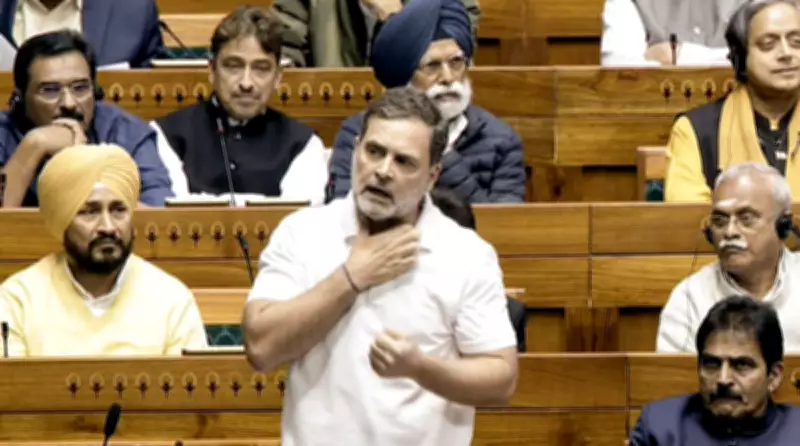
Rahul Gandhi Launches Scathing Attack on Modi Government Over US Trade Agreement
In a fiery political address, Congress leader Rahul Gandhi has launched a severe critique against Prime Minister Narendra Modi and the central government, accusing them of compromising India's economic sovereignty. Gandhi asserted that the administration has effectively "choked and surrendered" the future prospects of the nation's 1.4 billion citizens through a contentious trade deal negotiated with the United States.
Allegations of Economic Capitulation
Gandhi's remarks, delivered with palpable emotion, centered on what he described as a lopsided agreement that prioritizes foreign interests over domestic welfare. He argued that the terms of the deal, set to be finalized around 2026, could undermine key sectors of the Indian economy, potentially leading to job losses and reduced control over national resources. "This is not just a trade pact; it is a betrayal of the people's trust," Gandhi declared, emphasizing the long-term implications for India's development trajectory.
Political Repercussions and Government Response
The accusations have ignited a fresh wave of political debate, with opposition parties rallying behind Gandhi's statements to challenge the government's economic policies. Supporters of the Modi administration, however, have dismissed the claims as baseless fear-mongering, defending the trade deal as a strategic move to enhance India's global trade relations and attract foreign investment. Officials highlight that such agreements are meticulously crafted to protect national interests while fostering economic growth.

Analysts note that this confrontation underscores the deepening ideological divide in Indian politics, particularly regarding globalization and economic autonomy. The controversy is expected to influence upcoming political discourse and electoral strategies, as both sides vie to shape public perception on issues of trade and sovereignty.






