Rahul Gandhi Challenges Publisher's Account in Memoir Controversy
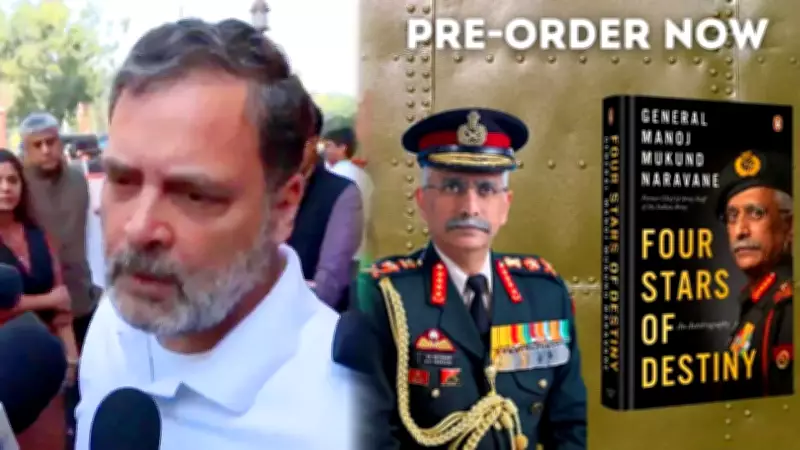
Leader of the Opposition in the Lok Sabha, Rahul Gandhi, has publicly questioned the veracity of a statement issued by Penguin Random House India regarding the circulation of former Army Chief General MM Naravane's unpublished memoir. This development follows the filing of an FIR by Delhi Police concerning the alleged unauthorized distribution of the book's contents.
Contradictions Highlighted Between Publisher and Author
In his reaction, Gandhi pointed directly to social media activity by General Naravane himself. He cited specific tweets from the former Army Chief that appeared to promote the forthcoming book, suggesting these actions contradict Penguin's official clarification about the memoir's status. "Either Naravane or Penguin is lying," Gandhi asserted, framing the situation as one where the two parties cannot both be presenting an accurate account.
The Congress leader further alleged that the memoir contains material that would be politically inconvenient for the current Government and Prime Minister Narendra Modi. This claim has added a significant layer of political tension to what began as a publishing and legal matter.

Political Reactions Intensify Parliamentary Debate
The controversy has triggered strong responses from ruling party members. Union Minister Giriraj Singh has formally demanded a privileged motion against Rahul Gandhi, accusing the Opposition leader of deliberately disrupting parliamentary proceedings and bringing the House into disrepute through his statements on the issue.
Adding to the political firestorm, BJP MP and actress Kangana Ranaut criticized the opposition's handling of the matter. She labeled the circulation of the memoir as "unauthorized" and argued that such actions show disrespect toward the judiciary, given the ongoing legal considerations surrounding the book.
Broader Implications for Publishing and Politics
This incident has sparked wider debates that extend beyond immediate political sparring. Questions are being raised about the proper protocols for unpublished works, the responsibilities of publishers in politically sensitive contexts, and the boundaries of parliamentary discussion regarding materials not yet officially released.
The status of General Naravane's memoir remains unclear amid these conflicting narratives. While Penguin Random House India has issued its clarification, the promotion by the author himself on social media platforms has created ambiguity that political figures are now leveraging for broader political arguments about transparency and accountability.
As the situation develops, it continues to highlight the complex intersection of publishing ethics, political strategy, and parliamentary decorum in India's contemporary political landscape.