

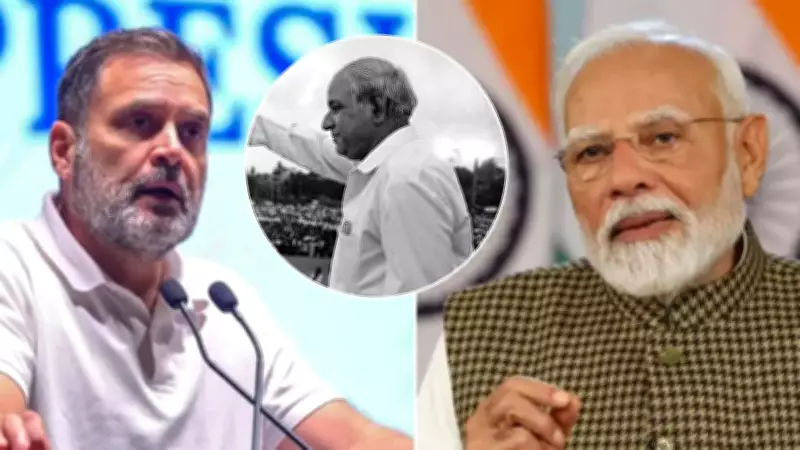
Rahul Gandhi Formally Requests Bharat Ratna for BSP Founder Kanshi Ram
In a significant political development, Congress MP and Leader of Opposition in the Lok Sabha, Rahul Gandhi, has written a formal letter to Prime Minister Narendra Modi. The letter urges the Prime Minister to posthumously award the Bharat Ratna, India's highest civilian honor, to Kanshi Ram, the founder of the Bahujan Samaj Party (BSP). This move underscores ongoing efforts to recognize leaders who have championed social justice and empowerment in the country.
Gandhi's Public Appeal on Social Media
Rahul Gandhi took to the social media platform X to amplify his request, describing Kanshi Ram as a champion of social justice and a guiding force behind the rise of Bahujan consciousness. He emphasized that conferring the Bharat Ratna would not only honor the late leader but also acknowledge the broader movement that has empowered millions of Bahujans across India. This public statement adds a layer of visibility to the demand, potentially galvanizing support from various quarters.
BJP's Critical Response to the Request
Following the letter, the Bharatiya Janata Party (BJP) swiftly criticized Rahul Gandhi, questioning why the Bharat Ratna was not awarded to Kanshi Ram during previous Congress-led governments. This political backlash highlights the ongoing tensions between the two major parties, with the BJP framing the request as an opportunistic move rather than a genuine tribute. The criticism reflects broader debates over historical recognition and political accountability in India's democratic landscape.

Background on Kanshi Ram and His Legacy
Kanshi Ram, who founded the Bahujan Samaj Party in 1984, is widely regarded as a pivotal figure in Indian politics for his advocacy of Dalit and marginalized communities. His efforts laid the groundwork for the political mobilization of Bahujans, leading to significant electoral successes, including the rise of leaders like Mayawati. The demand for his Bharat Ratna recognition taps into his enduring legacy and the continued relevance of his work in contemporary social justice movements.
Implications for National Politics and Social Justice
This request by Rahul Gandhi could have far-reaching implications for national politics, potentially influencing discussions around inclusivity and recognition of marginalized leaders. It also raises questions about the criteria for awarding the Bharat Ratna and how political parties navigate such honors in a polarized environment. As the debate unfolds, it may spark broader conversations about honoring historical figures who have shaped India's social fabric.






