

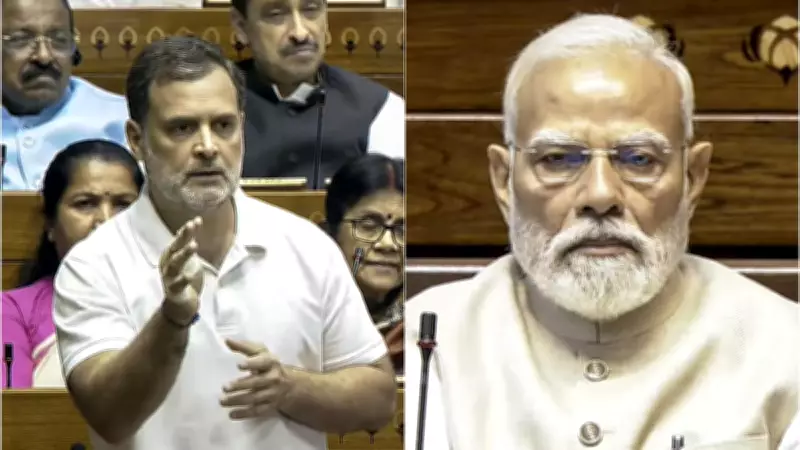
Rahul Gandhi's Cryptic 'Number 16' Riddle Sparks Political Buzz in Lok Sabha
In a dramatic turn during a recent Lok Sabha session, Congress leader Rahul Gandhi delivered a speech that has since ignited widespread speculation and debate across political circles. The focal point of his address was a cryptic riddle centered on the number 16, which he presented as a puzzle aimed directly at Prime Minister Narendra Modi and the ruling Bharatiya Janata Party (BJP).
The Enigmatic Statement and Its Immediate Impact
During his parliamentary intervention, Gandhi stated, "Everything lies in number 16. Solve the puzzle." This brief yet provocative declaration was made without further elaboration, leaving lawmakers, journalists, and the public scrambling to decipher its intended meaning. The remark was perceived as a veiled critique of the Modi government's policies and performance, adding a layer of intrigue to the ongoing political discourse.
The timing of this riddle is particularly significant, as it came amidst heated debates on various national issues, including economic challenges and governance matters. By invoking the number 16, Gandhi may have been alluding to the 16th Lok Sabha, which saw Modi's first term as Prime Minister from 2014 to 2019, or potentially referencing other symbolic aspects related to his tenure.

Political Interpretations and Reactions
Political analysts have proposed multiple interpretations of the "number 16" riddle. Some suggest it could point to the 16 years since the BJP-led National Democratic Alliance (NDA) first came to power at the center in 1998, hinting at long-standing critiques of the party's rule. Others speculate it might relate to specific policy failures or electoral outcomes associated with the number 16.
In response, BJP members dismissed Gandhi's comments as political theatrics lacking substance. They argued that such cryptic messages divert attention from substantive policy discussions and reflect the opposition's inability to present coherent alternatives. Meanwhile, Congress supporters have embraced the riddle as a clever rhetorical device to highlight perceived shortcomings in the Modi administration.
Broader Context and Historical Precedents
This incident is not isolated; political leaders have often used symbolic language and puzzles in parliamentary speeches to convey pointed messages. For instance, previous sessions have seen similar cryptic remarks that sparked debates and media frenzy. Gandhi's use of a riddle aligns with a tradition of employing metaphorical language in Indian politics to critique opponents without direct confrontation.
The Lok Sabha session where this occurred was already charged with discussions on key national issues, making Gandhi's intervention a strategic move to capture headlines and engage public interest. By framing his critique as a puzzle, he ensured that the message would resonate beyond the parliament walls, fueling discussions on social media and news platforms.
Implications for Upcoming Political Dynamics
As the political landscape evolves, such cryptic exchanges may influence public perception and set the tone for future electoral campaigns. The "number 16" riddle could become a rallying point for opposition narratives, emphasizing themes of accountability and transparency in governance. It also underscores the ongoing tension between the ruling party and the opposition, highlighting the theatrical aspects of parliamentary democracy.
In conclusion, Rahul Gandhi's enigmatic statement in the Lok Sabha has successfully generated buzz and speculation, reinforcing the role of symbolic communication in modern politics. Whether this riddle will have lasting political impact remains to be seen, but it has undoubtedly added a new dimension to the ongoing dialogue between India's major political forces.






