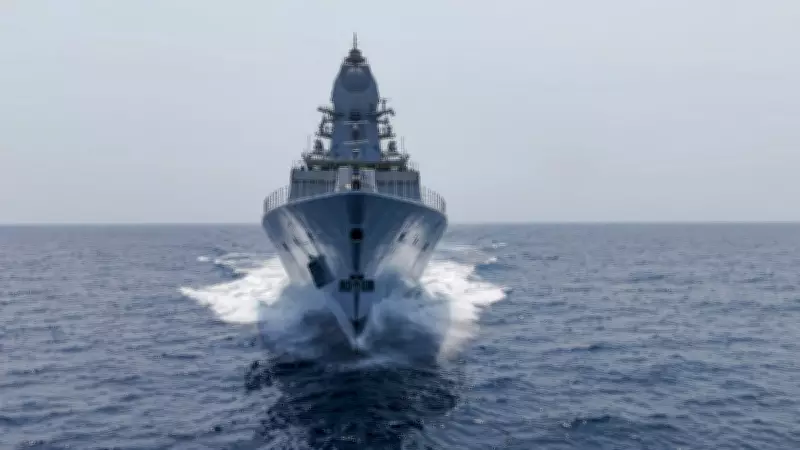
Defence Minister Rajnath Singh commissioned the Indian Navy's newest stealth frigate, INS Mahendragiri, at the Naval Dockyard in Visakhapatnam on July 11, 2026. The warship, built entirely in India, marks a significant milestone in the country's indigenous shipbuilding programme under the 'Make in India' initiative.
Indigenous Design and Construction
INS Mahendragiri is the seventh and final ship of the Project 17A class of stealth frigates. Designed by the Indian Navy's Warship Design Bureau and constructed by Mazagon Dock Shipbuilders Limited (MDL), the vessel boasts advanced stealth features and cutting-edge weapon systems. According to the Ministry of Defence, the frigate incorporates 75% indigenous content, including sensors, weapons, and combat management systems.
The ship is named after the Mahendragiri hills in Odisha, continuing the tradition of naming frigates after mountain ranges. It measures 149 meters in length, displaces approximately 6,700 tonnes, and can achieve speeds exceeding 28 knots. The propulsion system comprises four gas turbines, enabling sustained high-speed operations.

Advanced Capabilities
INS Mahendragiri is equipped with a multi-function surveillance radar, vertical launch missile systems, and anti-submarine warfare capabilities. It carries BrahMos supersonic cruise missiles and Barak 8 surface-to-air missiles, providing formidable offensive and defensive power. The frigate also features an integrated platform management system for enhanced automation and crew efficiency.
"The commissioning of INS Mahendragiri is a testament to India's growing self-reliance in defence manufacturing," said Rajnath Singh during the ceremony. "This warship will strengthen our maritime security and project India's power in the Indian Ocean region."
Strategic Impact
The induction of INS Mahendragiri comes at a time of heightened geopolitical tensions in the Indo-Pacific. The Indian Navy has been expanding its fleet to counterbalance China's growing naval presence. The Project 17A frigates are designed for multi-role operations, including air defence, anti-surface warfare, and anti-submarine warfare.
With the commissioning of this vessel, the Indian Navy now operates 44 frontline warships, with 18 more under construction. The government has allocated ₹1.5 lakh crore for naval modernisation in the current defence budget, emphasising indigenous production.
Future of Indian Naval Shipbuilding
The success of Project 17A has paved the way for the next-generation Project 18 frigates, which will feature even higher levels of indigenisation. The Indian Navy aims to achieve 80% indigenous content in future warships by 2030. INS Mahendragiri will be based at the Eastern Naval Command in Visakhapatnam, enhancing the Navy's presence on the eastern seaboard.
"This ship is not just a platform; it is a symbol of our technological prowess and determination to protect our maritime interests," Singh added. The commissioning ceremony was attended by senior naval officers, defence officials, and representatives from MDL.