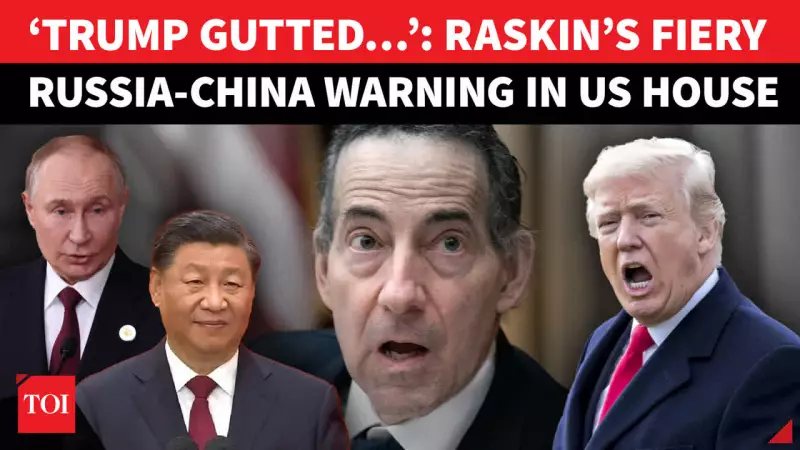
Jamie Raskin Sounds Alarm on Potential Foreign Influence in Trump Administration
During a tense House Judiciary Committee hearing, Democratic Congressman Jamie Raskin issued a stark warning about the Trump administration's potential vulnerability to external influence from global powers. The Maryland representative framed his concerns as a critical national security issue that transcends partisan politics.
Raskin's Warning About Authoritarian Influence
Raskin specifically highlighted how authoritarian regimes, particularly those led by Russian President Vladimir Putin and Chinese leader Xi Jinping, might be seeking to gain leverage within American democratic institutions. He emphasized that these foreign powers actively pursue opportunities to influence democratic systems worldwide, including the United States government.
The congressman argued that American institutions must maintain constant vigilance against such external pressures. His comments came amid ongoing scrutiny of President Donald Trump's foreign dealings and relationships with various international leaders.

National Security Concerns Over Partisan Politics
Raskin carefully positioned his warning as a matter of national security rather than a partisan attack on the administration. He stressed that the potential for foreign influence represents a fundamental threat to American sovereignty and democratic processes that should concern all citizens regardless of political affiliation.
The hearing occurred against a backdrop of increasing global tensions and complex diplomatic relationships involving the United States, Russia, China, and other major powers. Raskin's intervention adds to growing discussions about how democratic nations can protect their institutions from external manipulation while maintaining international relationships.
This development comes at a time when multiple international incidents have highlighted the complex web of global diplomacy and the challenges democratic nations face in navigating relationships with authoritarian states while protecting their own political processes from external interference.