

RBI Proposes Compensation for Digital Fraud Victims: A Key UPSC Topic
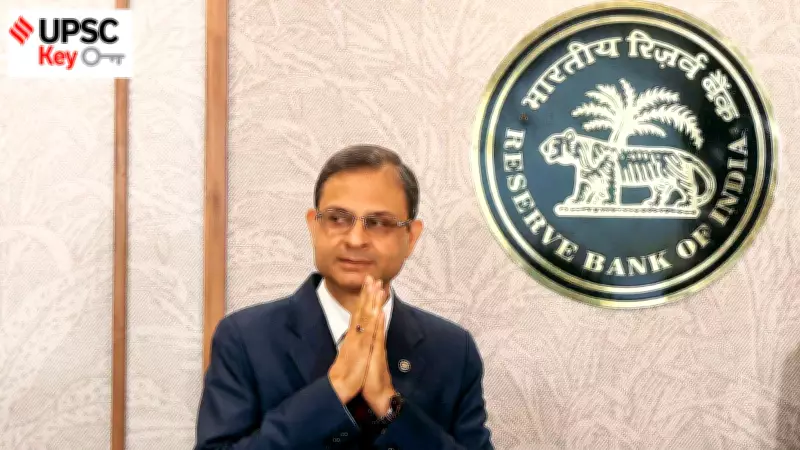
The Reserve Bank of India (RBI) has introduced a groundbreaking proposal to compensate victims of small-value digital frauds, offering up to Rs 25,000 per case. This initiative aims to bolster consumer confidence in India's rapidly expanding digital economy, addressing a critical issue where approximately 65% of frauds involve amounts below Rs 50,000. Notably, customers will be eligible for compensation even if they have shared a one-time password (OTP), a common vulnerability in cyber scams.
RBI Governor Sanjay Malhotra announced that this framework will allow a one-time lifetime benefit for losses due to such frauds, with the central bank covering 70% of the loss amount. The remaining 30% will be shared between the customer and the bank. Funding for these pay-outs will be sourced from the surplus income of the Deposit Education and Awareness Fund, which includes unclaimed deposits.
Broader Implications and UPSC Relevance
This development holds significant relevance for the UPSC Civil Services Examination, particularly under the syllabus for Preliminary Examination: Current events of national and international importance and Mains Examination: General Studies-III, covering challenges to internal security through communication networks, cyber security basics, and money-laundering prevention. The RBI's move aligns with efforts to enhance digital safety, as seen in the Indian Cyber Crime Coordination Centre (I4C), which blocked over 1,700 Skype IDs and 59,000 WhatsApp accounts in 2024 alone.

Key points for UPSC aspirants to ponder include the reasons behind the surge in cyberfraud, consumer protection reforms by the RBI, and government initiatives to boost digital transactions. The Citizen Financial Cyber Fraud Reporting and Management System has saved over ₹3,431 crore from fraudulent attempts, highlighting the scale of the issue.
Rat-Hole Mining Tragedy in Meghalaya: Environmental and Safety Concerns
In a devastating incident in Meghalaya's East Jaintia Hills district, 25 miners lost their lives in an illegally operating rat-hole mine, following a dynamite explosion. Rescue operations by the National Disaster Response Force (NDRF) and State Disaster Response Force (SDRF) revealed the perilous conditions of these mines, which involve narrow tunnels branching from deep vertical pits.
Rat-hole mining, a method banned by the National Green Tribunal (NGT) and Supreme Court due to its unscientific and hazardous nature, persists in Meghalaya due to economic factors and lack of alternative livelihoods. Justice (Retd) Katakey's committee found over 22,000 illegal coal mine openings in East Jaintia Hills alone in 2019, underscoring the widespread issue.
UPSC Syllabus Connections
This tragedy is crucial for UPSC topics under Preliminary Examination: Current events and Mains Examination: General Studies-II, focusing on government policies and interventions for development. Key aspects include the environmental impacts of rat-hole mining, such as land degradation and water pollution, and the challenges in enforcing bans. Previous year questions, like the 2017 mains on coal mining's inevitability for development, highlight its exam relevance.
Monetary Policy Committee Holds Interest Rates Steady
The RBI's Monetary Policy Committee (MPC) maintained the repo rate at 5.25% in its February 2026 meeting, reflecting a neutral policy stance amid favorable economic conditions. The MPC revised GDP growth projections upward to 7.4% and retail inflation to 2.1% for FY 2026, supported by robust consumption and fiscal measures like income tax cuts.
This decision impacts lending and deposit rates, with no immediate changes expected in equated monthly instalments (EMIs) for repo-linked loans. The RBI's cautious approach conserves policy ammunition for future uncertainties, aligning with UPSC syllabus areas on Indian economy and monetary policy tools.

India's Stance on Russian Oil Imports Amid US Pressure
Following US President Donald Trump's claim that India agreed to stop buying crude from Russia, the Indian government has emphasized energy security for its 1.4 billion citizens. While Indian refiners may reduce Russian oil imports, a complete halt is unlikely due to technical and commercial challenges. Russian oil accounted for 22% of India's imports in January 2026, down from previous highs but still significant.
Key considerations include the compatibility of US and Venezuelan crude with Indian refineries, which are accustomed to medium-sour crudes. This topic ties into UPSC themes on bilateral agreements and India's strategic autonomy, with previous questions on oil grades like West Texas Intermediate.
CAR T-Cell Therapy Advancements by IIT Bombay
Researchers at IIT Bombay have made strides in CAR T-cell therapy, a promising cancer treatment that engineers T-cells to target tumors. Their study, published in Biomaterials Science, addresses the bottleneck of retrieving lab-grown T-cells without damage, using a gentle enzyme called Accutase. This innovation could enhance the reliability and affordability of therapies, with Indian efforts aiming to reduce costs from crores to more accessible levels.
For UPSC, this relates to science and technology developments and health sector management, with previous prelims questions on the role of B and T cells in disease protection.
Conclusion: Integrating Current Affairs for UPSC Success
These topics—RBI's digital fraud compensation, rat-hole mining, MPC decisions, Russian oil imports, and CAR T-cell therapy—offer a comprehensive view of current events essential for UPSC preparation. Aspirants should focus on understanding the factual details, policy implications, and connections to previous exam questions to build a strong foundation for both Prelims and Mains.





