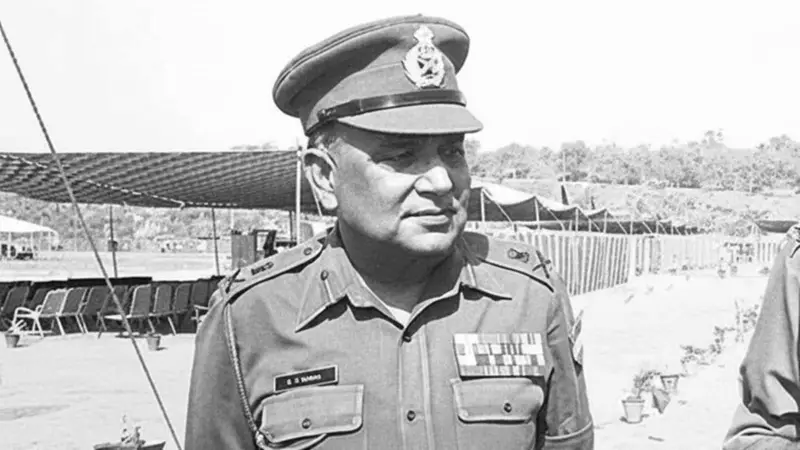
As India marks the birth centenary of Lt Gen Srinivas Kumar Sinha, the nation remembers a towering figure whose life was intertwined with the making of the modern Republic. Born on January 7, 1926, Sinha, affectionately known as Mannay Sinha, was a soldier, scholar, administrator, diplomat, and governor who represented a unique leadership tradition that prized intellect, cultural empathy, and moral courage.
From World War II to Nation Building: The Arc of a Soldier's Career
Sinha's journey in uniform began during the final phase of World War II, as India stood on the cusp of independence. He witnessed the seismic events of 1947 firsthand. His early posting to the Military Operations Directorate placed him at the heart of India's earliest security crises, including the Partition and the tribal invasion of Jammu and Kashmir. This experience gave him a profound, operational understanding of the Kashmir issue that would last a lifetime.
His career spanned the complete spectrum of soldiering. He commanded troops in the field, served in sensitive intelligence and staff appointments, and ultimately rose to the position of Vice Chief of the Army Staff. Beyond command, he was a dedicated instructor, shaping future military minds at the Infantry School and the Defence Services Staff College in Wellington. Long before the term became fashionable, Sinha was the quintessential scholar-warrior, treating history not as a mere academic subject but as a vital tool for understanding contemporary challenges.

The Governor: Nuanced Leadership in Jammu and Kashmir
After retiring from the Army, Sinha continued to serve the nation as Ambassador to Nepal and Governor of Assam. However, it was his tenure as the Governor of Jammu and Kashmir that showcased his distinctive approach to complex problems. He was far more than a ceremonial figurehead; he engaged deeply with the security dynamics of the Valley.
In March 2005, then Brigadier Syed Ata Hasnain drove him to the Kaman Aman Setu on the Line of Control. There, Sinha was briefed on preparations for the historic Karvan-e-Aman bus service linking Uri and Muzaffarabad. For Sinha, this was not just a routine confidence-building measure but a profound strategic and civilizational moment. He firmly believed that peace in Kashmir could not be sustained by military force alone.
This instinct was evident earlier, at the peak of terrorism in the Valley. Defying prevailing caution, Sinha supported organising a music festival on the banks of Dal Lake. This was a deliberate act of cultural assertion, designed to signal solidarity with Kashmir's liberal traditions and deny radical elements a monopoly over public expression.
The Enduring Legacy of a Liberal Warrior
Sinha's leadership style was defined by authenticity and connection. He moved effortlessly across ranks, sharing songs and laughter with Gurkha soldiers along the LoC, demonstrating that command flowed from respect, not distance. His engagement with the sharp and probing Kashmiri media was a masterclass. He neither evaded tough questions nor tried to dominate, instead disarming critics with his knowledge and composure.
Senior officers shaped by prolonged counter-insurgency service often develop a unique ability to manage complexity—balancing firmness with empathy, and authority with restraint. Sinha epitomised this quality. For him, religion was never a divider; professionalism and liberal values were the unifying force.
Lt Gen S K Sinha leaves behind a rich legacy of books and columns reflecting his lifelong engagement with India's strategic challenges. As India commemorates his 100th birth anniversary, his life stands as a powerful testament to the idea that intellect in uniform is not an ornament but a fundamental duty. He remains a model of the soldier-statesman, whose wisdom and liberal ethos are more relevant than ever.