

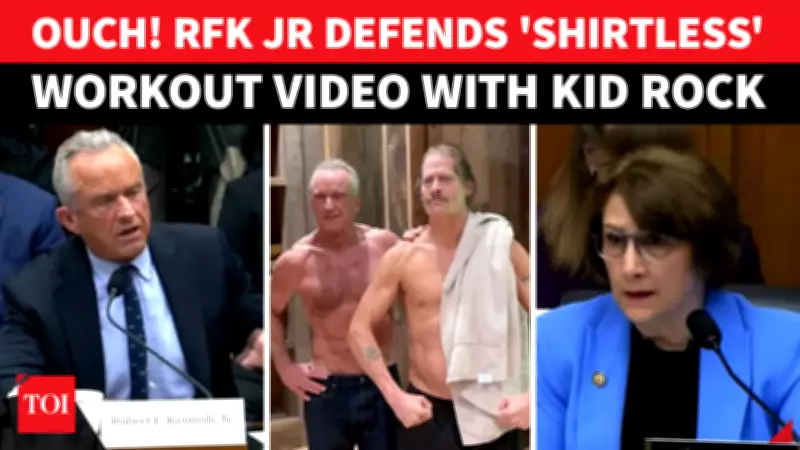
RFK Jr Faces Congressional Fire Over Taxpayer-Funded Workout Video
Robert F. Kennedy Jr found himself in the political hot seat during a heated House hearing this week, as Democratic lawmakers sharply criticized a publicly funded video featuring him shirtless while working out with musician Kid Rock. The controversy centers on the "MAHA" workout public service announcement, which has sparked a broader debate about government spending priorities.
Democrats Question Funding Priorities
During the intense congressional session, Democratic representatives challenged RFK Jr about why taxpayer money was allocated to produce the viral workout video rather than being directed toward essential services like childcare or healthcare programs. The lawmakers argued that public funds should address more pressing societal needs, creating a tense atmosphere in the Capitol Hill hearing room.
"This represents a fundamental misallocation of resources," one Democratic congressperson asserted during the exchange. "When American families are struggling with healthcare costs and childcare accessibility, why are we funding celebrity workout videos?"

RFK Jr's Unwavering Defense
Despite the pointed criticism, Robert F. Kennedy Jr stood firm in his defense of the controversial video. He presented the MAHA workout campaign as a legitimate public health initiative designed to motivate Americans toward better fitness habits.
"So many people came up to me and said it inspired them to work out," RFK Jr testified, emphasizing the video's positive impact. "This isn't just entertainment—it's part of a comprehensive public health strategy to address obesity and sedentary lifestyles that contribute to chronic disease."
The independent political figure framed the viral moment as an effective tool for health messaging, arguing that unconventional approaches can sometimes reach audiences that traditional public health campaigns might miss.
The Broader Public Health Argument
RFK Jr elaborated on his perspective, connecting the workout video to larger public health objectives:
- Preventive health approach: Encouraging physical activity as frontline defense against chronic conditions
- Viral messaging potential: Leveraging social media trends to disseminate health information
- Celebrity influence: Utilizing public figures to model healthy behaviors
- Cost-effectiveness: Arguing that preventive measures reduce long-term healthcare expenditures
This defense positioned the video not as frivolous entertainment but as a strategic component of national health promotion efforts.
Political Implications and Public Reaction
The congressional confrontation highlights ongoing tensions between different visions of appropriate government spending. While RFK Jr maintains that innovative health messaging deserves funding, critics see the video as emblematic of misplaced priorities in public expenditure.
The exchange has generated significant public discussion, with reactions divided along predictable political lines. Supporters praise the video's motivational value, while opponents question whether such content represents the best use of limited public resources.
As the debate continues, the MAHA workout video controversy serves as a microcosm of larger discussions about how government should approach public health communication in the digital age, balancing traditional methods with approaches that leverage viral media and celebrity influence.






