Kiren Rijiju Rejects Opposition's Demand for Past Discussions, Emphasizes Forward-Looking Governance
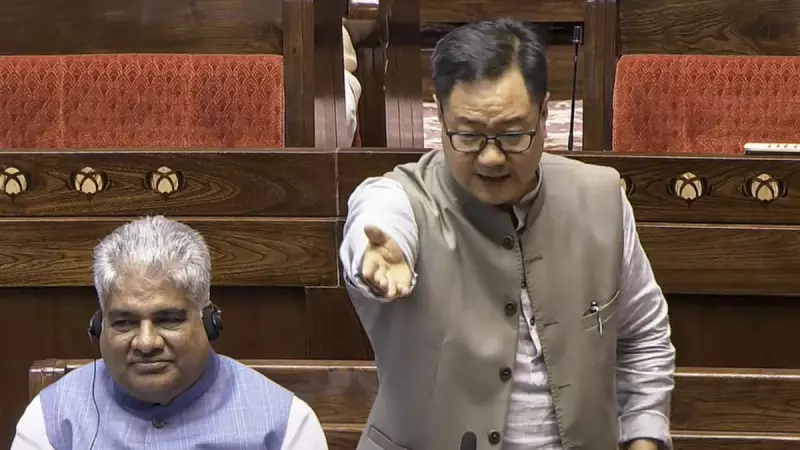
In a strong rebuttal to the opposition's recent calls, Union Minister Kiren Rijiju has firmly stated that the government cannot reverse gear and go back to the past. This statement came as the opposition sought a discussion on historical issues, which Rijiju dismissed as counterproductive to the nation's progress.
Opposition's Call for Discussion on Past Matters
The opposition parties have been pushing for a parliamentary discussion on certain past events, arguing that revisiting these issues is crucial for accountability and transparency. However, Rijiju countered this by highlighting the government's commitment to a future-oriented agenda.
He emphasized that while historical contexts are important, dwelling on them excessively could hinder the country's forward momentum. Rijiju pointed out that the government's focus is on implementing policies that drive economic growth, social welfare, and technological advancement.

Rijiju's Emphasis on National Development and Progress
In his response, Rijiju underscored the importance of moving ahead with a clear vision for the future. He stated, "We cannot afford to be stuck in the past; our priority must be on building a better tomorrow for all citizens." This aligns with the government's broader strategy of focusing on development initiatives that benefit the nation as a whole.
Rijiju also mentioned that the government is open to constructive discussions on current and future challenges, but reiterated that revisiting past issues without a clear purpose is not in the national interest. He called for unity and collaboration in addressing pressing matters such as:
- Economic reforms and job creation
- Infrastructure development and digital transformation
- Healthcare and education improvements
- Environmental sustainability and climate action
Political Implications and Broader Context
This exchange highlights the ongoing political dynamics in India, where the opposition often seeks to hold the government accountable for past actions, while the ruling party emphasizes its achievements and future plans. Rijiju's stance reflects a common theme in contemporary Indian politics: a focus on progressive governance over retrospective analysis.
Experts suggest that such debates are part of a healthy democracy, but Rijiju's firm rejection indicates the government's determination to stay on course with its agenda. The minister's comments have sparked discussions among political analysts and the public, with many supporting the need to balance historical accountability with forward-looking policies.
In conclusion, Kiren Rijiju's response serves as a reminder of the government's unwavering commitment to national development. By rejecting calls to dwell on the past, he reinforces the message that India's path forward is one of innovation, growth, and collective progress, leaving no room for backtracking on its journey towards a brighter future.