Columnist Tavleen Singh has issued a stark warning about a deepening crisis of faith between the Indian government and its citizens. In a piece published on January 11, 2026, Singh argues that the growing perception of the government's motives and methods as suspect is becoming a dangerous political liability.
Electoral Timing and Enforcement Actions Raise Eyebrows
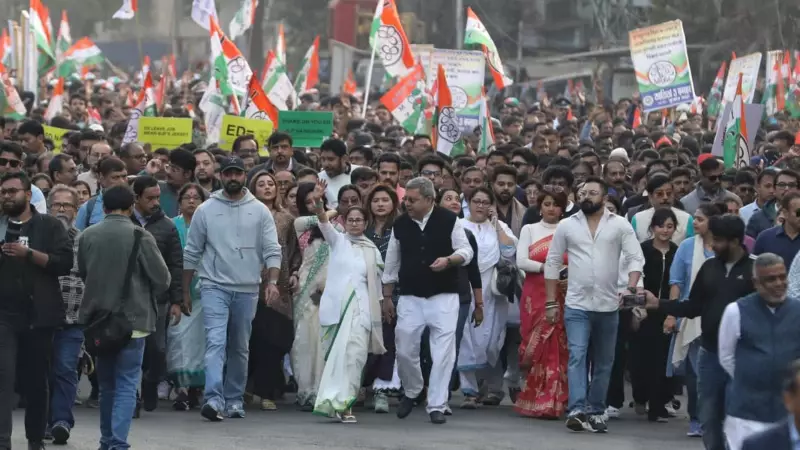
Singh acknowledges that West Bengal Chief Minister Mamata Banerjee's recent actions—including calling the Home Minister names and allegedly disrupting an Enforcement Directorate (ED) raid—were inappropriate. However, she questions the timing of central agencies' actions. The recent ED raid on the Indian Political Action Committee (I-PAC) office in Kolkata, which Banerjee claims held her election strategy, occurred just months before the state elections. The ED stated it was investigating money laundering linked to illegal coal mining.
This follows a pattern, Singh notes, recalling the Election Commission's Special Intensive Review (SIR) in Bihar mere months before its state polls. The consistent proximity of such interventions to elections fuels suspicion among the opposition and the public about their intent, she argues.

A Cascade of Incidents Eroding Public Trust
The distrust extends beyond political circles into everyday governance. Singh cites the incident in Old Delhi where a winter-night demolition drive near a mosque sparked rumors of the mosque's destruction, leading to violent clashes. This, she states, is a direct consequence of lost trust, where government actions are immediately viewed with suspicion.
Further eroding credibility, according to Singh, is the case of Kapil Mishra. While activist Umar Khalid remains in jail without trial, Mishra, who gave an incendiary speech during the 2020 Delhi riots, is now the Minister of Law and Justice in the Delhi government and has faced no charges. The contrast, she implies, undermines faith in impartial justice.
The response to the Indore municipal water poisoning deaths also drew criticism. Singh highlights how Urban Development Minister Kailash Vijayvargiya dismissed a reporter's query as "ghanta (nonsensical)" instead of addressing the pipeline failure. Only junior officials were suspended, while the minister faced no consequence for the tragedy, following a pattern where his son was also previously released by a special court after a cricket bat threat incident.
Systemic Failures and the Futility of Seeking Redress
Singh points to the government's standard retort—to seek justice in courts—as increasingly hollow. With a staggering backlog of an estimated 5 crore cases across Indian courts and 90,000 cases in the Supreme Court alone, the judicial process is painfully slow. She compares it to the long-delayed commissions of inquiry, like those for the 1984 anti-Sikh pogrom, which took so long that justice became meaningless for the victims.
The columnist concludes that this pervasive "miasma of mistrust" is the government's most pressing concern. More critical than winning any single state election, like West Bengal, is the urgent task of winning back public faith. Failure to do so, she warns, will lead to more leaders emulating Banerjee's defiance, further diminishing the stature of the government and its most powerful figures.