RSS Chief Bhagwat Addresses 'Achche Din' and RSS-BJP Dynamics in Mumbai Speech
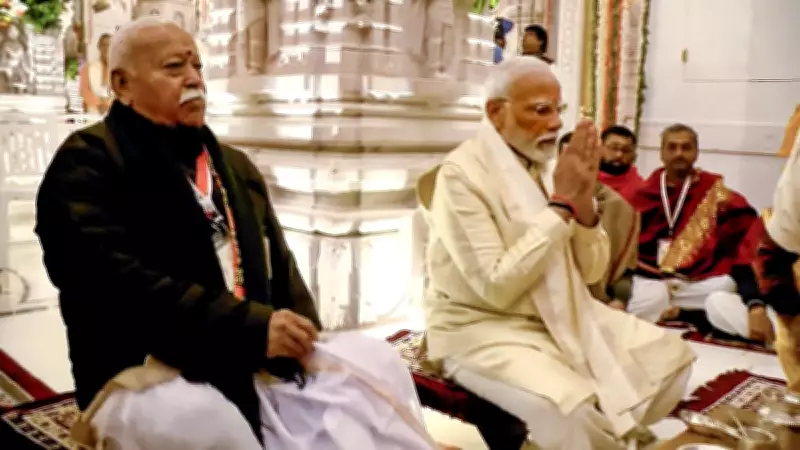
In a significant address delivered in Mumbai, Rashtriya Swayamsevak Sangh (RSS) chief Mohan Bhagwat provided insights into the evolving relationship between the RSS and the Bharatiya Janata Party (BJP), while also touching upon the popular slogan 'Achche Din' (Good Days). Bhagwat's remarks come at a time when political observers are closely monitoring the dynamics between the ideological parent organization and the ruling party at the Centre.
Bhagwat's Emphasis on Non-Interference in Governance
One of the key highlights from Bhagwat's speech was his clear assertion that the RSS does not engage in what he termed as 'backseat driving'. This phrase is often used to describe undue influence or interference from behind the scenes. By making this statement, Bhagwat aimed to dispel any notions that the RSS exerts direct control over the BJP's governance decisions or policy implementations.
He elaborated that while the RSS and BJP share common ideological roots and objectives, their operational domains are distinct. The RSS focuses on cultural and social upliftment through its grassroots activities, whereas the BJP is responsible for political governance and administration. This clarification is seen as an effort to maintain a balanced public perception, especially amid ongoing debates about the extent of RSS influence on BJP-led governments.

Context of 'Achche Din' and Its Political Resonance
The term 'Achche Din' gained prominence during the BJP's 2014 election campaign, symbolizing promises of economic growth, development, and improved living standards for all Indians. In his speech, Bhagwat referenced this slogan, linking it to the broader vision of national progress that both organizations advocate. He emphasized that the realization of 'Achche Din' is a collective goal that requires sustained efforts from all stakeholders, including the government, civil society, and citizens.
Bhagwat's comments on 'Achche Din' are interpreted as a reaffirmation of the RSS's support for the BJP's developmental agenda, while also subtly reminding the party of its commitments to the electorate. This aligns with the RSS's role as a moral and ideological guide, rather than a direct participant in day-to-day politics.
Evolving Ties Between RSS and BJP: A Historical Perspective
The relationship between the RSS and BJP has undergone several phases of evolution since the BJP's inception in 1980. Key aspects of this dynamic include:
- Ideological Alignment: Both organizations are rooted in the ideology of Hindutva, which emphasizes cultural nationalism and the promotion of Hindu values.
- Organizational Support: The RSS has historically provided grassroots support and volunteer manpower during BJP's election campaigns, contributing to its electoral successes.
- Policy Influence: While Bhagwat denied 'backseat driving', the RSS is known to offer suggestions on key policy matters, such as education, cultural issues, and national security, which often find resonance in BJP's governance.
- Periodic Tensions: There have been instances of disagreements between the RSS and BJP on certain policies or political strategies, highlighting the complexity of their partnership.
Bhagwat's speech underscores a mature phase in this relationship, where mutual respect and defined boundaries are emphasized to avoid public controversies and ensure cohesive functioning.
Implications for Indian Politics and Governance
Bhagwat's clarification on the RSS's non-interference stance has several implications for the current political landscape in India:

- Enhanced BJP Autonomy: It reinforces the BJP's image as an independent political entity capable of making governance decisions without overt pressure from the RSS.
- Public Perception Management: By addressing the 'backseat driving' notion, the RSS aims to counter criticism from opposition parties and media about undue influence, thereby strengthening public trust.
- Focus on Development Agenda: The reference to 'Achche Din' keeps the spotlight on developmental issues, aligning with the government's ongoing initiatives and future plans.
- Ideological Continuity: Despite the emphasis on operational separation, Bhagwat's speech reaffirms the shared long-term goals of national rejuvenation and cultural preservation.
As India navigates various socio-economic challenges, the evolving RSS-BJP ties, as articulated by Bhagwat, will continue to shape political discourse and policy directions. His Mumbai speech serves as a timely reminder of the delicate balance between ideological guidance and political autonomy in a vibrant democracy.