

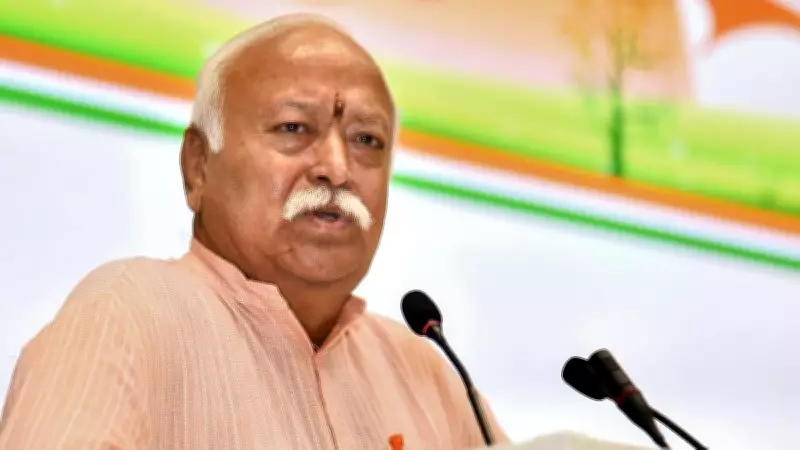
RSS Chief Mohan Bhagwat Stresses Oneness as Antidote to Global Conflict
In a profound address that resonated with philosophical depth, Rashtriya Swayamsevak Sangh (RSS) chief Mohan Bhagwat articulated a compelling perspective on the root causes of global strife. Speaking on March 6, 2026, Bhagwat asserted that wars and conflicts continue to plague humanity primarily because people fail to recognize the essential oneness, or ekatva, that binds all individuals together, despite apparent differences.
The Core Message: Unity in Diversity as a Universal Truth
Bhagwat elaborated that while human beings may appear distinct in terms of culture, religion, nationality, or ideology, these superficial variations often obscure a deeper, unifying truth. "People appear different, but all are one," he stated, emphasizing that this principle of oneness is not merely a philosophical concept but a practical reality that, if acknowledged, could transform global relations.
He pointed out that wars do not cease because humanity collectively overlooks this fundamental aspect of existence. Instead, conflicts arise and persist when societies become entrenched in divisive narratives, ignoring the interconnectedness that defines the human experience. Bhagwat's remarks underscore a call for introspection and a shift in mindset, urging individuals and nations to move beyond parochial interests and embrace a broader, more inclusive worldview.

Historical and Contemporary Context of Bhagwat's Statement
This statement comes at a time when the world grapples with numerous geopolitical tensions, regional disputes, and ideological clashes. Bhagwat's message aligns with the RSS's long-standing advocacy for cultural unity and national integrity, often framed within the context of Indian traditions that celebrate diversity while promoting harmony.
Key points from his address include:
- Recognition of Oneness: The failure to see beyond external differences leads to misunderstandings and hostilities.
- Impact on Global Peace: Wars are not inevitable but are a consequence of this perceptual gap.
- Call to Action: Encouraging a collective effort to foster empathy and mutual respect across boundaries.
Bhagwat's insights invite a reevaluation of how societies approach conflict resolution, suggesting that lasting peace may hinge on cultivating a sense of shared humanity rather than emphasizing divisions.
Broader Implications for Indian Politics and Society
As a prominent figure in Indian socio-political discourse, Bhagwat's words carry significant weight, particularly in a nation known for its rich tapestry of cultures and religions. His emphasis on oneness resonates with the constitutional ideal of unity in diversity, reinforcing the need for cohesive social fabric amidst diverse identities.
This address also reflects the RSS's ongoing efforts to shape public discourse around themes of national unity and moral values. By highlighting the universal principle of ekatva, Bhagwat positions the organization as a proponent of peace and harmony, both domestically and on the global stage.
In conclusion, Mohan Bhagwat's remarks serve as a timely reminder that the path to a more peaceful world may lie in recognizing our inherent oneness. As conflicts continue to challenge international stability, his message advocates for a paradigm shift—one that prioritizes collective well-being over fragmented interests, ultimately aiming to reduce the incidence of war through greater awareness and compassion.






