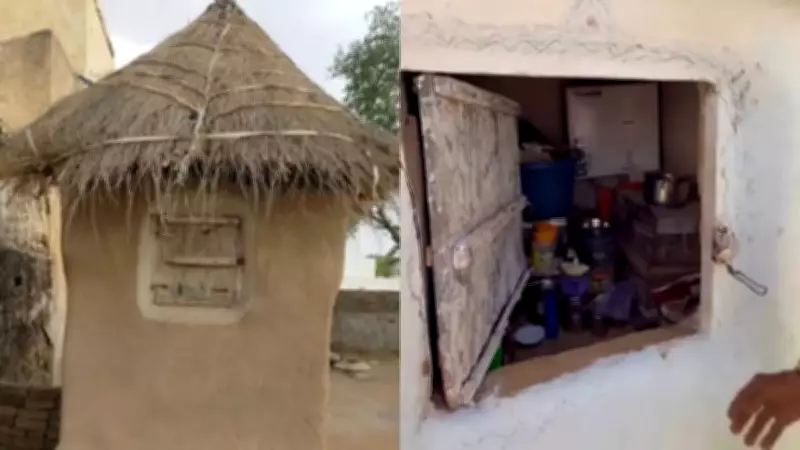
Rajasthan's Clay Fridge: An Eco-Friendly Solution to Food Spoilage
As summer arrives, food spoilage becomes a significant challenge for many Indian households, leading to widespread waste. While refrigerators offer a modern solution to prevent this, they come with drawbacks, including high electricity bills and increased carbon emissions that harm the planet. But what if there were a cooling technology as effective as a fridge, yet capable of saving both electricity and money? In Rajasthan, a living solution exists that embodies sustainability and efficiency, offering a glimpse into a greener future.
What Is a Clay Fridge?
According to an Instagram post by Raj Rajasthani (@raj_rajasthani21), a structure crafted from clay, cow dung, and layers of khipra grass functions exactly like a refrigerator. This humble, electricity-free device stores perishable foods such as milk, curd, freshly made roti, dal, and sabzi, keeping them fresh for extended periods. Its simple design belies its effectiveness, providing a natural alternative to conventional cooling methods.
How Does This Fridge Work?
Experts explain that the science behind this clay fridge is straightforward yet ingenious. Porous clay allows water to evaporate slowly, which reduces the internal temperature of the structure. The khipra grass covering acts as insulation, shielding the interior from the harsh sun. Together, these elements create a cooling chamber that operates without any electricity, preserving food for days and minimizing environmental impact.

Rooted in the Past
While this concept may seem novel to younger generations, it is deeply rooted in Indian tradition. For centuries, rural households have utilized similar methods to prevent food spoilage, such as digging into the ground to create cooling spots for leftovers and dairy products. These practices have been passed down through generations, showcasing a time-tested approach to sustainable living that requires no electrical power.
Can You Make It at Home?
Constructing such a structure in urban settings may be challenging, but alternatives exist to reduce electricity consumption and carbon footprints while staying connected to nature. For instance, using a matka (earthen pot) to cool water or setting curd in a mitti ka bartan are simple, effective methods. Sourcing khipra grass to build a mini-den-like structure can also help store fruits, vegetables, and cooling drinks like shikanji and chaas, avoiding the need for refrigerated beverages.
What Does It Teach Us?
These traditional practices not only promote sustainability but also offer insights into a simpler, nature-centric way of life. They encourage younger generations to adopt eco-conscious habits and appreciate the wisdom of past generations. By embracing such methods, individuals can reduce their environmental impact, save on electricity costs, and foster a deeper connection with natural resources, paving the way for a more sustainable future.