

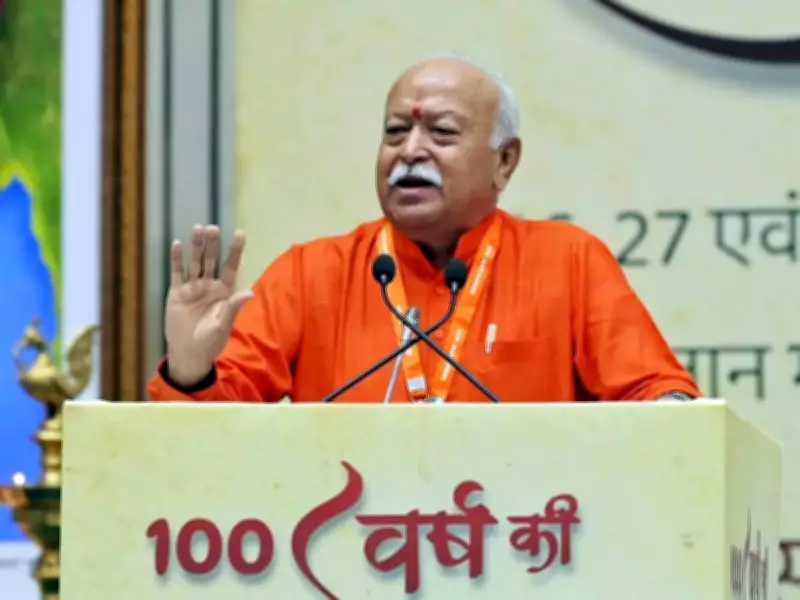
Rashtriya Swayamsevak Sangh (RSS) chief Mohan Bhagwat on Saturday stated that the organization is the largest voluntary organization globally but also the most misunderstood. He made these remarks while addressing an event held as part of the RSS centenary celebrations.
Understanding the RSS
Bhagwat explained that the program was organized to help people gain a better understanding of the RSS, which he said is often viewed incorrectly from the outside. He noted, "This programme has been organised to provide an opportunity to understand an organisation that is often misunderstood. People say it is the largest voluntary organisation in the world, and at the same time, one of the most misunderstood."
As the RSS entered its 100th year, it was decided to reach out to people again and explain the Sangh's work. Bhagwat emphasized that external observers might perceive the RSS differently—some see it as a paramilitary body due to its uniformed route marches, while others view it as a nationwide gymnasium because of its promotion of Indian games and martial arts. However, he clarified that these perceptions are inaccurate, stating, "But it is not all that. It is difficult to understand the Sangh from the outside."

Direct Engagement Needed
Bhagwat stressed the importance of direct engagement to truly comprehend the RSS. He said, "The best way to understand the RSS is to engage with it and experience it from within. However, to do so, one must first be assured that it is safe to test and understand it. A lecture or a book can provide at least that much understanding of the Sangh." He further highlighted that the RSS was neither formed as a reaction to any specific situation nor does it oppose any section of society or political party.
Reiterating the organization's objectives, Bhagwat noted that the RSS emerged with the goal of contributing to the nation's welfare and continues its efforts aimed at serving the country. He added that the decision to connect with people during the centenary year was driven by the need to address misconceptions surrounding the RSS.






