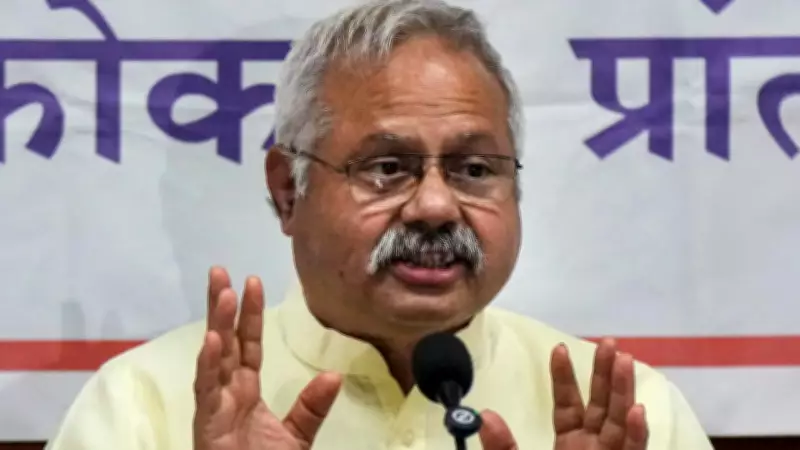
NEW DELHI: RSS national publicity chief Sunil Ambekar on Friday stated that the Sangh was not sufficiently powerful at the time of Partition, adding that otherwise the division of the country would not have taken place. He made these remarks during the screening of the documentary "Delhi Mein Sangh Yatra", presented by Indraprastha Vishwa Samvad Kendra in Delhi.
RSS expansion and limitations
Referring to the period between 1942 and 1947, Ambekar noted that the RSS had expanded rapidly across Delhi and undivided Punjab, with many people joining the organization. However, its strength at that time was still limited. He emphasized that during Partition, RSS volunteers worked to protect Hindus in areas that later became part of Pakistan and remained there until the last person reached safety.
Volunteer sacrifices and relief efforts
Ambekar highlighted that countless volunteers made sacrifices during the violence and rehabilitation efforts, while several camps were set up for displaced people. He also mentioned that in the first fortnight of August 1947, RSS chief M S Golwalkar, known within the organization as "Shri Guruji", was in Karachi guiding volunteers on relief and protection work amid the turmoil.

Founder's vision and cultural awakening
Ambekar asserted that RSS founder K B Hedgewar did not establish the organization for political purposes but to create cultural awakening and strengthen society. "If Doctor Hedgewar wanted to do politics, he could have formed a political party. The aim was to organise society and build national self-confidence," he said. He added that RSS activities in Delhi had begun during Hedgewar's lifetime and remained closely linked to the organization's 100-year history.
Documentary traces RSS journey in Delhi
RSS Delhi prant pracharak Ritesh Agrawal said the documentary traced the journey of the organization in Delhi from its early beginnings to its expansion through historical records, memories, interviews, and archival material related to Partition and post-Independence developments.
About the Author: Manash Pratim Gohain is a seasoned journalist with over two decades at The Times of India, covering education policy, politics, and governance. He has reported extensively on the National Education Policy 2020, accreditation reforms, skilling initiatives, student politics, urban policy, and social movements.