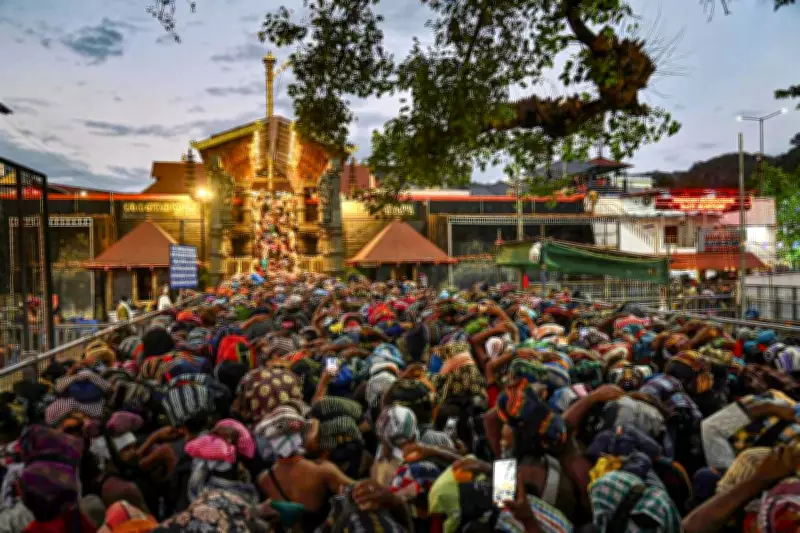
The Supreme Court on Wednesday made a significant observation in the Sabarimala case, stating that Hinduism is a way of life and visiting a temple is not mandatory. A five-judge constitution bench, headed by Chief Justice S.A. Bobde, was hearing the review petitions against the 2018 judgment that allowed women of all ages to enter the Sabarimala temple.
Key Observations by the Supreme Court
The bench, also comprising Justices R. Subhash Reddy, B.R. Gavai, Surya Kant, and A.S. Bopanna, noted that the essence of Hinduism lies in its philosophy and not in mandatory temple visits. The court remarked that the practice of barring women of menstruating age from the temple is based on custom and not on essential religious practice.
Hinduism as a Way of Life
The Supreme Court emphasized that Hinduism is a way of life, and it does not compel any individual to visit a temple. The observation came during the arguments advanced by senior advocate K. Parasaran, representing the Travancore Devaswom Board, which manages the Sabarimala temple. Parasaran argued that the restriction on women aged 10 to 50 years was an essential part of the temple's tradition.

However, the court questioned whether the practice could be considered an essential religious practice, especially when the temple itself is open to all Hindus. The bench pointed out that the deity at Sabarimala is a celibate, and the restriction is based on the belief that the presence of women would disturb the celibacy of the deity.
Review Petitions and Arguments
The review petitions have been filed by various parties, including the Travancore Devaswom Board and several devotees, challenging the 2018 verdict that struck down the ban on women's entry. The Supreme Court had earlier referred the matter to a larger bench due to the significant legal and religious questions involved.
During the hearing, the court also discussed the concept of 'essential religious practices' as defined in previous judgments. The bench observed that the practice of barring women is not an essential part of Hinduism, as the religion does not mandate temple visits. The court noted that the practice might be a custom but not a core tenet of the faith.
Implications of the Observation
The Supreme Court's observation is likely to have far-reaching implications for the Sabarimala case and other similar religious practices. The court is expected to deliver its final verdict on the review petitions after hearing all parties. The observation that Hinduism is a way of life and temple visits are not mandatory could influence the court's decision on whether the ban on women's entry is constitutionally valid.
The case has been a subject of intense debate, with supporters of the ban arguing that it is an ancient tradition, while opponents claim it is discriminatory and violates the right to equality. The Supreme Court's 2018 judgment had sparked widespread protests, particularly in Kerala.
Conclusion
The Supreme Court's observation in the Sabarimala case underscores the dynamic nature of religious practices and the need to balance tradition with constitutional values. The final decision on the review petitions will be closely watched as it could set a precedent for other religious institutions across India.