

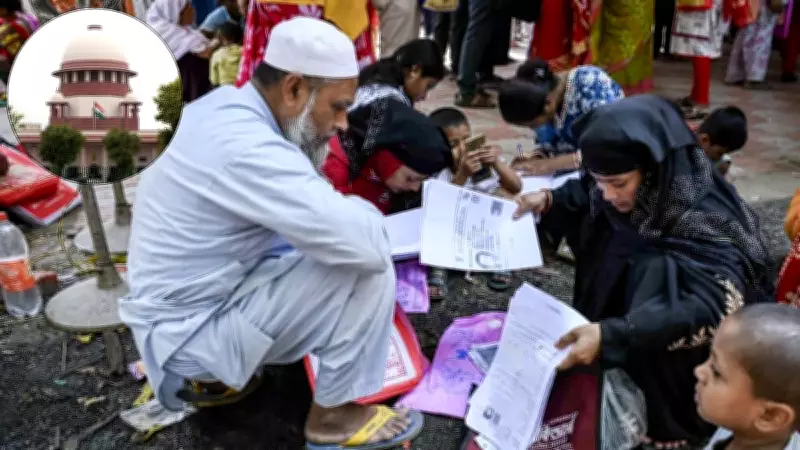
Supreme Court Issues Landmark Ruling for West Bengal Assembly Elections 2026
In a significant development ahead of the West Bengal Assembly Elections 2026, the Supreme Court of India has delivered a crucial verdict that could impact voter participation. The court has allowed individuals who were previously excluded from the electoral rolls to cast their votes, provided that Special Intensive Revision (SIR) tribunals clear their names before the critical dates of April 21 and April 27, 2026.
Judicial Bench and Key Directives
The ruling was issued by a bench comprising Chief Justice of India Surya Kant, along with Justices Joymalya Bagchi and Vipul M. Pancholi. This bench has explicitly directed the Election Commission of India to take immediate and necessary actions to facilitate the inclusion of such persons in the supplementary revised electoral rolls. The directive emphasizes the importance of ensuring that no eligible voter is disenfranchised due to procedural delays or errors in the electoral process.
Implications for Voter Inclusion
This decision is poised to have far-reaching consequences for the upcoming elections in West Bengal. By setting clear deadlines for the SIR tribunals to resolve pending cases, the Supreme Court aims to streamline the voter registration process and uphold democratic principles. The Election Commission is now tasked with making logistical arrangements to accommodate these last-minute inclusions, which may involve updating polling stations and voter lists across the state.

Key aspects of the ruling include:
- Deadline Clarity: Voters must have their names cleared by SIR tribunals before April 21 and 27, 2026, to be eligible for inclusion.
- Election Commission's Role: The commission is mandated to ensure that supplementary revised electoral rolls reflect these changes promptly.
- Enhanced Voter Participation: This move is expected to boost voter turnout by addressing exclusions that might have occurred during earlier revisions.
Background and Context
The West Bengal Assembly Elections 2026 are highly anticipated, with political parties gearing up for a competitive race. The Supreme Court's intervention comes amid concerns over voter exclusion issues that have surfaced in previous elections. The SIR tribunals, established to handle disputes and revisions in electoral rolls, play a pivotal role in this process. By allowing cleared individuals to vote, the court reinforces the right to franchise as a fundamental aspect of India's democracy.
This ruling underscores the judiciary's proactive stance in safeguarding electoral integrity and ensuring fair play. As the election dates approach, all stakeholders, including political entities and civil society, will be closely monitoring the implementation of this directive to assess its impact on the electoral landscape.






