

In a significant development, the Supreme Court of India on Monday refused to grant bail to activists Umar Khalid and Sharjeel Imam in the alleged larger conspiracy case behind the 2020 northeast Delhi riots. The apex court held that a prima facie case under the stringent Unlawful Activities (Prevention) Act (UAPA) was made out against them.
BJP Leaders Hail Judiciary's Decision
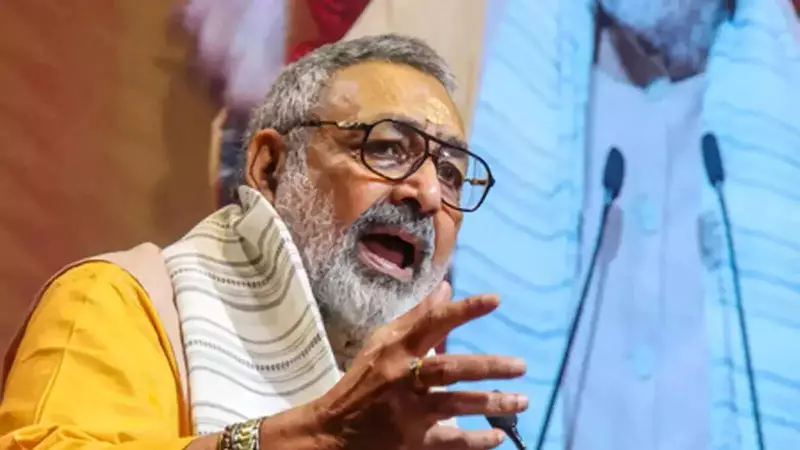
Welcoming the court's order, Union Minister and senior BJP leader Giriraj Singh launched a sharp attack, equating the actions of Khalid and Imam with those of Pakistani terrorist Ajmal Kasab. He accused them of working to sever the strategic 'Chicken's Neck' corridor and spreading hatred against the nation.
"I welcome the judiciary's decision. Umar Khalid and Sharjeel Imam have worked to sever the Chicken's Neck corridor and spread hatred against the country; they are doing the same work that Pakistan is doing. They are doing the same kind of work that Kasab did," Singh told news agency ANI. He added that those supporting the accused should feel ashamed.

Echoing similar sentiments, BJP spokesperson Shehzad Poonawalla hailed the verdict as 'Satyameva Jayate' (truth alone triumphs). He asserted that the court's observation confirmed that the Delhi riots were "organised not organic, sponsored not spontaneous." Poonawalla also trained his guns on the Congress party, demanding an apology for what he called "defending" the accused and supporting the 'tukde tukde gang'.
Court's Observations and Other Accused Granted Bail
While denying relief to Khalid and Imam, the Supreme Court bench made a crucial observation regarding trials under stringent laws. It stated that delay in trial cannot be treated as a 'trump card' to automatically override the statutory safeguards under laws like the UAPA. This underscores the court's careful balancing act between the rights of the accused and the requirements of national security legislation.
In the same hearing, the top court showed a different consideration for five other co-accused. It granted bail to Gulfisha Fatima, Meeran Haider, Shifa Ur Rehman, Mohd. Saleem Khan, and Shadab Ahmad. This selective bail grant highlights the court's case-specific scrutiny of the evidence presented against each individual.
Reactions from the Accused and Case Background
Following the verdict, Umar Khalid, who remains incarcerated, conveyed through his partner Banjyosna Lahiri that he was happy for the co-accused who were granted bail. Lahiri shared on social media platform X that when she informed Khalid she would visit him the next day, he replied, "Good, good, aa jana. Ab yahi zindagi hai" (Good, come. This is life now).
The case stems from the communal violence that engulfed northeast Delhi in February 2020, during protests against the Citizenship Amendment Act (CAA). The clashes resulted in the death of 53 people and left over 700 injured. The prosecution's case alleges a pre-meditated conspiracy behind the riots, charges that Khalid, Imam, and others have consistently denied.
The Supreme Court's decision marks a pivotal moment in the long-running legal battle surrounding one of the capital's worst episodes of communal violence in decades. The denial of bail under the UAPA indicates the court's preliminary acceptance of the gravity of the allegations, setting the stage for a protracted trial ahead.






