

Supreme Court Raises Concerns During Hearing on Mamata Banerjee's Petition Against EC's Electoral Roll Revision
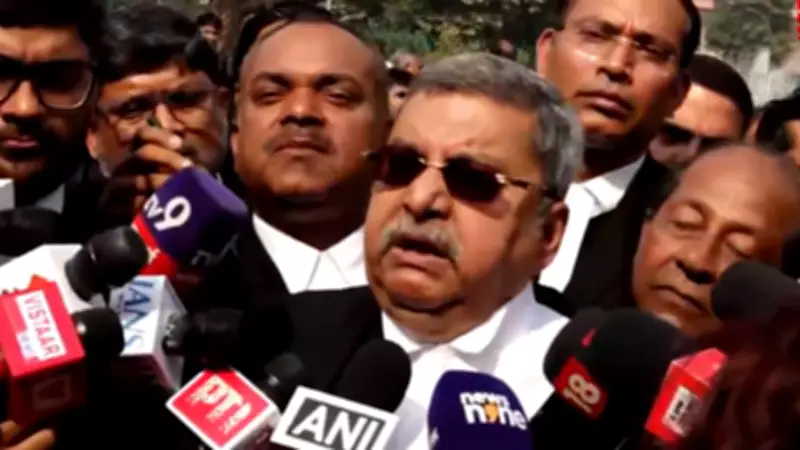
Trinamool Congress MP and advocate Kalyan Banerjee revealed on Wednesday that the Supreme Court highlighted two significant points while considering West Bengal Chief Minister Mamata Banerjee's plea challenging the Election Commission's special intensive revision of electoral rolls. The court has scheduled the matter for further hearing on Monday, February 9.
Key Arguments Presented During the Hearing
According to Banerjee, Mamata Banerjee personally argued her case before the bench, which observed that additional time would be granted if necessary for her to present arguments. The bench specifically noted that two important points have been taken in the petition itself, setting the stage for a detailed examination of the issues.
Mamata Banerjee raised several critical concerns during her submission:

- Exclusive Deletion Without Inclusion: She argued that only deletion of names from electoral rolls was proceeding, while no inclusion process had been conducted for nearly four months.
- Questionable Deployment of Micro-Observers: She challenged the appointment of micro-observers, stating there was no constitutional power to appoint such officials and alleging many had been brought from BJP-ruled states.
- Discrepancies in Implementation: The Chief Minister claimed the revision exercise was being conducted hastily in non-BJP states while remaining incomplete in several BJP-ruled states.
Specific Examples of Alleged Discrepancies
Banerjee cited multiple instances of alleged irregularities in the electoral roll revision process:
- Spelling variations in voter names, such as Datta versus Dutta and Bipool versus Bipul.
- A specific case where a father's name was recorded as Khan but printed as Kha in the current revision.
- Approved documents including domicile certificates, Aadhaar, and OBC certificates being allegedly rejected, forcing voters to endure hours-long queues.
Court's Observations and Directions
The Supreme Court bench, comprising Chief Justice of India Surya Kant and Justices Joymala Bagchi and Vipul Pancholi, heard detailed submissions from senior advocate Shyam Divan representing Mamata Banerjee. Divan presented alarming statistics:
- Approximately 32 lakh voters remain unmapped in the electoral database.
- 1.36 crore names appear in the logical discrepancy list requiring verification.
- Hearings are pending in nearly 63 lakh cases related to voter inclusion or deletion.
- About 8,300 micro-observers have been deployed despite constitutional questions about their appointment.
In response, Chief Justice Surya Kant emphasized that genuine voters must remain on the electoral rolls, stating, Every problem has a solution, and we must ensure that no innocent person is left out. The court orally observed that timelines may need extension, particularly with 56-60 lakh cases still pending and only four days remaining in the scheduled process.
Broader Context and Political Implications
Mamata Banerjee told the court she had written six letters to the Election Commission without satisfactory resolution, describing herself as a bonded labourer fighting for a larger public cause rather than partisan interests. The hearing occurs amid an ongoing standoff between Trinamool Congress leadership and the Election Commission regarding the special intensive revision exercise.
Earlier this week, Mamata Banerjee met Chief Election Commissioner Gyanesh Kumar in Delhi, later alleging she was humiliated during the meeting. The Supreme Court has issued notices to both the Election Commission and the Chief Electoral Officer of West Bengal, directing them to address the concerns raised in the petition.

The court's intervention comes as Mamata Banerjee's plea seeks urgent directions to halt voter name deletions, scrap the special intensive revision, rely on existing electoral rolls, ease verification norms, and accept Aadhaar as valid documentation. The matter represents a significant constitutional and electoral governance issue with implications for democratic processes in West Bengal and potentially other states undergoing similar revision exercises.





