Supreme Court Intervenes in ED-West Bengal Government Clash
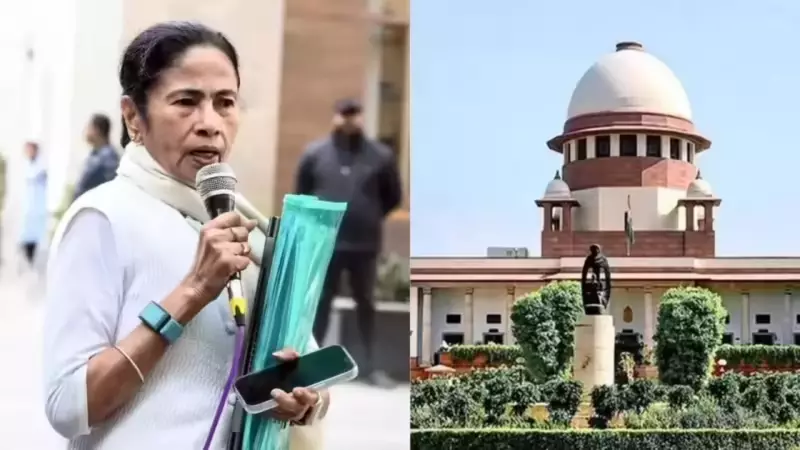
The Supreme Court of India has stepped into a major confrontation between central investigative agencies and the West Bengal government. On Thursday, the court issued formal notices to Chief Minister Mamata Banerjee and several state officials. This action came in response to a petition filed by the Enforcement Directorate.
A Serious Constitutional Issue
Justices Prashant Kumar Mishra and Vipul M Pancholi described the matter as extremely serious. They expressed concern about wider implications for the country's legal framework. The bench stated they hold a prima facie opinion that the petition raises critical questions about investigations by central agencies.
The court emphasized the need to examine whether state agencies are improperly interfering with federal investigation bodies. They warned that unresolved issues could lead to similar problems in other states with different political leadership.

Background of the Confrontation
The conflict centers around an alleged coal mining scam investigation. According to Solicitor General Tushar Mehta, who represented the Enforcement Directorate, the situation escalated dramatically. He claimed Chief Minister Mamata Banerjee, accompanied by senior police officials including the Director General of Police, entered premises where ED was conducting raids.
Mehta alleged that evidence was taken away during this incident. He further stated that the Chief Minister and state officials staged a dharna, physically preventing ED officers from performing their duties. The Solicitor General argued that such actions demoralize central investigative forces.
Legal Arguments and Counterarguments
The Enforcement Directorate's petition faced strong opposition from senior advocates representing West Bengal. Kapil Sibal, appearing for Chief Minister Mamata Banerjee, questioned the timing of the raids. He suggested the actions were politically motivated, occurring during election preparations.
"Why was there a need to conduct raids in the midst of an election cycle?" Sibal asked during proceedings. He pointed out that the last statement in the coal mining case was recorded in February 2024, questioning why the ED became active again as elections approached.
Abhishek Manu Singhvi, representing the state government, raised procedural objections. He accused the ED of "forum shopping" by approaching the Supreme Court directly instead of continuing with the High Court proceedings. Singhvi maintained that the search operations were conducted peacefully according to official records.
Court's Immediate Directions
The Supreme Court bench took several important decisions after hearing both sides:
- Issued notices to Chief Minister Mamata Banerjee and West Bengal officials
- Granted two weeks for filing responses
- Stayed the FIR registered by West Bengal police against ED officials
- Directed preservation of all evidence including CCTV footage
The court observed that the situation required careful examination to maintain the rule of law. They noted that different political parties governing different states could lead to inconsistent application of legal procedures if such conflicts remain unresolved.
Broader Political Context
This legal battle occurs against a backdrop of increasing tensions between the central government and opposition-ruled states. Several states have accused central agencies like the ED and CBI of being used for political purposes. Meanwhile, the central government maintains that some states protect corrupt officials by obstructing investigations.
The Supreme Court acknowledged these broader implications. Their decision to examine the matter recognizes that the outcome could set important precedents for federal-state relations in India's investigative processes.
The bench specifically addressed the balance between election activities and legitimate investigations. They questioned whether political party functions could legitimately shield individuals from proper investigative procedures when serious offenses are involved.

With both sides given time to prepare their responses, the legal battle now moves to its next phase. The Supreme Court's eventual ruling could significantly impact how central and state agencies interact during sensitive investigations.