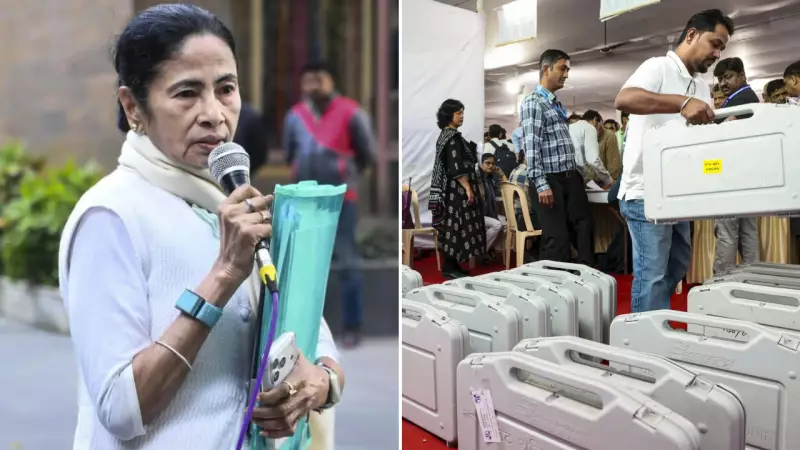
Supreme Court Steps In Over ED Raid Claims in Bengal
The Supreme Court has taken decisive action regarding recent Enforcement Directorate raids in West Bengal. The court issued formal notices to Chief Minister Mamata Banerjee and other state officials. These notices demand responses within two weeks concerning allegations made by the ED during raids on I-PAC offices.
Court Implements Protective Measures
In addition to seeking replies, the Supreme Court imposed significant restrictions. The court explicitly restrained West Bengal state police from investigating a First Information Report filed against ED officials. This move prevents potential interference with the central agency's operations.
The court also issued a preservation order for all relevant CCTV footage. This directive ensures that crucial visual evidence from the raid locations remains intact and available for future examination.

Mumbai Civic Polls Face Ink Controversy During Voting
Mumbai's municipal elections encountered unexpected controversy as voting progressed across the city. By 3:30 PM, voter turnout had reached 41.08 percent across 227 electoral wards. However, significant variations emerged between different polling areas.
Indelible Ink Allegations Surface
The election process faced serious allegations regarding voting procedures. BJP leader Ashish Shelar raised concerns about the integrity of the indelible ink used to mark voters. Shelar claimed that this supposedly permanent ink could actually be wiped off easily.
The State Election Commission responded promptly to these allegations. Commission officials confirmed they are investigating viral videos that appear to show the ink being removed. The investigation aims to determine whether these claims have any factual basis.
Hounslow Protest Over Alleged Grooming Incident
Approximately two hundred Sikh protesters gathered outside a residential flat in Hounslow. The demonstration centered on serious allegations involving an Afghan man and a Sikh minor. Protesters claimed the man had engaged in grooming behavior toward the young girl.
Police Intervention and Community Response
Local police intervened to manage the gathering and maintain public order. Following the protest, the minor girl returned safely to her family. The incident prompted broader community action beyond the immediate protest.
Sikh Youth UK announced plans for a national inquiry into alleged grooming cases within their community. This organization aims to systematically investigate similar incidents and develop protective measures for vulnerable community members.
Iran Closes Airspace Amid Escalating Unrest
Iran implemented significant airspace restrictions as internal protests intensified. The closure came alongside warnings from United States President Donald Trump regarding potential military action. Tehran authorities disputed casualty figures circulating in international media, claiming reports exaggerated the situation.
International Travel Disruptions
The airspace closure forced multiple international airlines to reroute their flights. These adjustments created logistical challenges for air travel throughout the region. Simultaneously, the United States advised its personnel to limit non-essential travel in Gulf areas.
Regional tensions remained elevated as diplomatic exchanges continued between involved nations. The situation created uncertainty about potential escalation and its impact on international relations in the Middle East.
Supreme Court Declines Intervention in Film Certification Dispute
The Supreme Court refused to intervene in an ongoing legal dispute involving actor Vijay's film certification. The court declined to hear a plea challenging a Madras High Court stay order. This stay order had prevented certification of Vijay's film Jana Nayagan.
Legal Proceedings Continue at Lower Court
The Supreme Court directed film producers to pursue their case before the Madras High Court instead. This decision leaves the film's release timeline uncertain as legal proceedings continue. The production team must now navigate the lower court system to resolve certification issues.

The ongoing dispute highlights the complex relationship between artistic expression and regulatory frameworks in Indian cinema. Industry observers will monitor how this case influences future film certification processes.