Supreme Court Questions Election Commission's SIR Objectives and Citizenship Verification
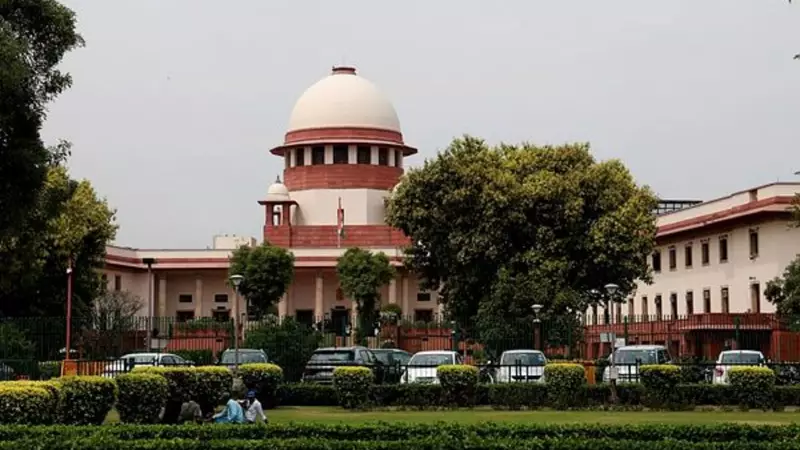
The Supreme Court of India raised pointed questions on Thursday regarding the Election Commission's Special Intensive Revision (SIR) of electoral rolls, specifically probing whether the exercise aims to identify illegal immigrants. The bench, comprising Chief Justice of India Surya Kant and Justice Joymalya Bagchi, engaged in detailed arguments with the EC's counsel about the underlying objectives of the SIR announced on June 24, 2025.
EC's Clarification on Citizenship vs. Illegal Immigration
Senior Advocate Rakesh Dwivedi, representing the Election Commission, emphasized that the SIR focuses on verifying citizenship under Article 326 of the Constitution, which mandates that only citizens should be on electoral rolls. He stated clearly, "This Act is not about illegal migration. It's about citizenship. We are not examining that (illegal immigration)." Dwivedi explained that the 2003 amendments to the Citizenship Act, passed during Atal Bihari Vajpayee's tenure and notified under Manmohan Singh's government, were enacted with consensus across political parties to address citizenship determination.
Judicial Scrutiny of SIR Order's Language
Justice Bagchi noted that the June 24 SIR order does not explicitly mention illegal immigration as a reason for the special revision. The order cites reasons including rapid urbanization, frequent migration for education and livelihood, duplication of entries, constitutional requirements for citizenship verification, amendments to the Citizenship Act, and concerns from political parties about electoral roll accuracy. Justice Bagchi questioned whether the reference to migration in the order specifically meant inter-country or illegal migration, stating, "Migration when it's inter-state is always lawful migration... When you use migration simplicitor, we will interpret it as inter-state migration."

Dwivedi responded that the term migration could encompass inter-country movement, but acknowledged it could have been stated more clearly. He maintained that even without this aspect, the other reasons provided are sufficient justification for the SIR.
Legal Basis and Discretion of Election Commission
The EC's counsel argued that Section 21(3) of the Representation of the People Act grants the Commission discretion to deviate from the Registration of Electors Rules, 1960, when necessary. He highlighted that amendments in 1956 and 1966 introduced this discretion, indicating Parliament's intent to allow the EC flexibility. Dwivedi asserted that the SIR, being legislative in character, allows for additional reasons to be presented in counter-affidavits, and the EC is within its rights to conduct the revision as per the June 24 order.
Political Context and Practical Implementation
Dwivedi pointed out that political parties across the spectrum have expressed concerns about electoral roll accuracy in states like Haryana, Karnataka, and Maharashtra, yet some now oppose the SIR. He referenced psephologist Yogendra Yadav's acknowledgment that SIR is essential, albeit with design concerns. The counsel also addressed practical aspects, noting that authorities limited admissible documents for voter enrollment to 11, with 24% of required submissions in Bihar successfully filed, arguing against claims of arbitrariness.
International References and Due Process
In a broader context, Dwivedi contested arguments about due process by citing actions of US President Donald Trump, such as interventions in Venezuela and Greenland, questioning the applicability of US due process standards. He emphasized that the EC's exercise is designed to ensure electoral integrity without overreach.
The Supreme Court's inquiry continues to scrutinize the balance between electoral roll accuracy, constitutional mandates, and the potential implications for citizenship verification in India's democratic framework.