

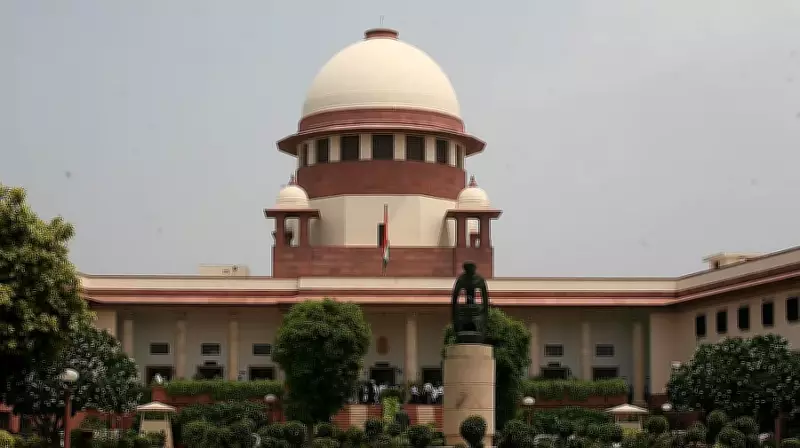
The Supreme Court on Wednesday questioned how a non-believer from North India could claim the right of entry to the Sabarimala temple in Kerala. The observation came from a nine-judge Constitution bench that was hearing a batch of petitions related to discrimination against women at religious places, including the Sabarimala temple.
Court's Observation
The bench, led by the Chief Justice of India, posed this query during the proceedings. The court noted that the petitioner, who identified as a non-believer, had no religious connection to the temple. The justices remarked that the right to enter a religious place is typically tied to faith and belief.
Background of the Case
The Sabarimala temple has been at the center of a legal battle over the entry of women of menstruating age. In 2018, a five-judge bench of the Supreme Court had lifted the ban on women's entry, sparking widespread protests. The current nine-judge bench is examining broader issues of religious freedom and gender equality.

- The case involves multiple petitions challenging the exclusionary practices at religious sites.
- The court is considering whether religious denominations can regulate entry based on gender or other factors.
- The verdict could have far-reaching implications for other religious institutions.
Arguments Presented
The petitioner's counsel argued that the right to access public places, including temples, is a fundamental right under Article 19 of the Constitution. However, the court questioned the locus standi of a non-believer who does not follow the religious practices of Sabarimala.
Senior advocates representing the temple management countered that the temple's traditions are protected under Article 26, which grants religious denominations the right to manage their own affairs. They emphasized that the temple's customs, including the restriction on women aged 10-50, are essential to its faith.
Next Steps
The bench is expected to continue hearing arguments on the scope of religious freedom and the extent of judicial intervention in religious matters. The court has sought responses from various stakeholders, including the Kerala government and the temple board.
The verdict in this case is anticipated to clarify the balance between individual rights and religious autonomy in India.






