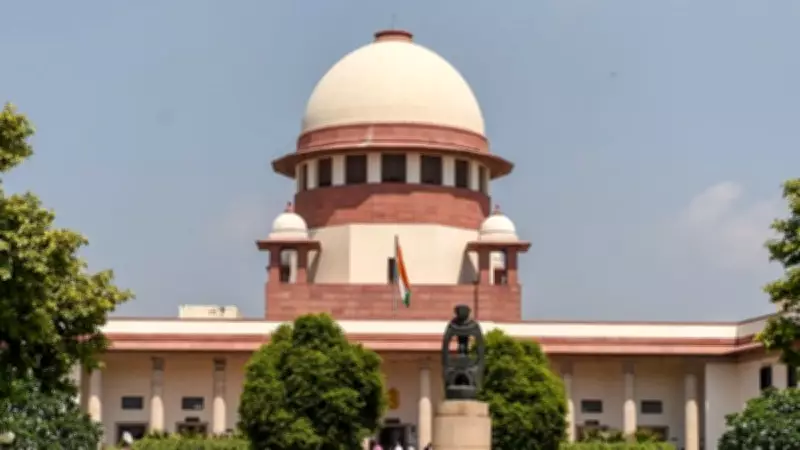
The Supreme Court of India has made a significant observation regarding the reservation policy, questioning why children of IAS officers should be entitled to quota benefits. The remark came during a hearing on a petition challenging the constitutional validity of reservation in promotions for government employees.
Court's Stance on Reservation for Privileged Classes
A bench comprising Justices L. Nageswara Rao and B.R. Gavai expressed concern over the current reservation system, stating that it appears to benefit those who are already privileged. The court specifically pointed out that children of IAS officers, who often have access to quality education and resources, should not be eligible for quota benefits meant for socially and economically backward classes.
Key Observations by the Supreme Court
The bench remarked, "If parents are IAS officers, then why should their children seek quota? They already have the means and opportunities. The reservation policy was intended to uplift the downtrodden, not to create a perpetual cycle of benefits for the privileged." The court further noted that the creamy layer principle, which excludes the affluent among backward classes from reservation benefits, should be strictly applied to ensure that only the genuinely needy benefit.

Petition Challenging Reservation in Promotions
The case involves a challenge to the constitutional validity of reservation in promotions for Scheduled Castes and Scheduled Tribes. The petitioners argue that the current system perpetuates inequality and does not take into account the economic status of individuals. The court's observation has sparked a debate on whether reservation should be based solely on caste or should also consider economic criteria.
Reactions and Implications
Legal experts and social activists have reacted to the court's observation. Some support the view that reservation should be need-based, while others emphasize that caste-based discrimination persists and requires affirmative action. The Supreme Court has reserved its judgment on the matter, which could have far-reaching implications for India's reservation policy.
The court's stance highlights the need for a nuanced approach to reservation, balancing historical injustices with contemporary realities. As the nation awaits the final verdict, the debate on the effectiveness and fairness of the reservation system continues.