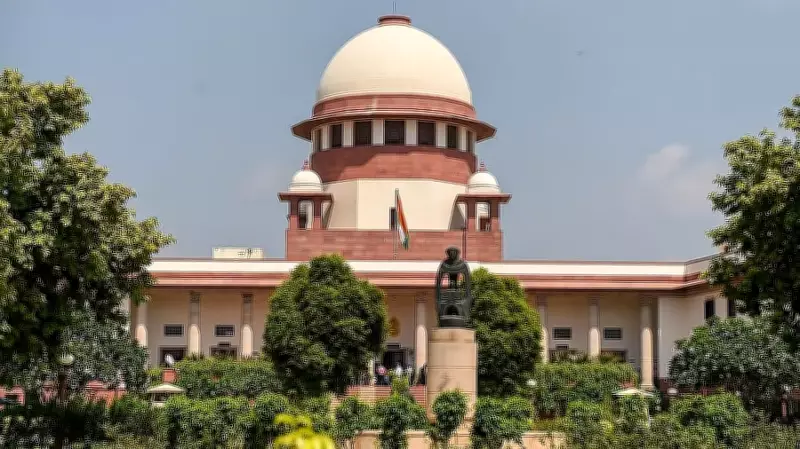
The Supreme Court on Friday refused to entertain a plea seeking directions to fill vacant posts in various state human rights commissions. A bench of Justices Vikram Nath and V Mohana asked the petitioner why he had not approached the high court concerned.
Petitioner Directed to High Court
The bench observed that the petitioner could move the respective high courts for relief. The court was hearing a public interest litigation (PIL) filed by one Shubham Awasthi, who sought a direction to the central government and state governments to fill vacancies in state human rights commissions.
Background of the Case
The petitioner argued that the vacancies in these commissions were affecting the functioning of the human rights bodies and delaying justice for victims of human rights violations. He highlighted that several state human rights commissions were operating without a full complement of members, including chairpersons.

However, the Supreme Court was not inclined to entertain the plea directly, stating that the issue could be raised before the high courts of the respective states. The bench noted that the high courts are better equipped to deal with the specific circumstances of each state.
Legal Recourse
The court's decision means that the petitioner will have to approach the high court of the state where the vacancies exist. The Supreme Court did not issue any notice to the governments or seek a response, effectively dismissing the plea without a detailed hearing.
This development comes amid concerns over the functioning of state human rights commissions, which are statutory bodies established under the Protection of Human Rights Act, 1993. The commissions are tasked with investigating complaints of human rights violations and recommending remedial measures.
Several states have faced criticism for delays in appointing members to these commissions, leading to pendency of cases and inefficiency. The Supreme Court's refusal to intervene may prompt petitioners to seek relief from high courts, which can issue directions to state governments to fill vacancies expeditiously.
The bench did not elaborate on the reasons for its decision but reiterated that the appropriate forum for such grievances is the high court. The petitioner's counsel sought permission to withdraw the plea with liberty to approach the high court, which the court granted.