

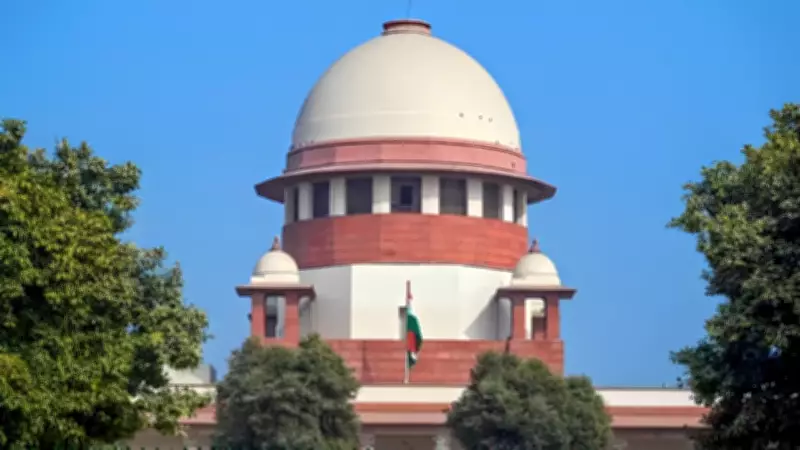
Supreme Court Demands Personal Affidavit from West Bengal Police Chief Over Election Commission Allegations
The Supreme Court of India has taken a firm stance regarding serious allegations made by the Election Commission of India against the ruling Trinamool Congress (TMC) in West Bengal. On Monday, a bench comprising Chief Justice Surya Kant, Justice Joymalya Bagchi, and Justice N V Anjaria directed the Director General of Police (DGP) of West Bengal to submit a personal affidavit addressing the EC's claims of deliberate attempts to sabotage the Special Intensive Revision (SIR) of electoral rolls.
Election Commission's Grave Accusations
The Election Commission, in its detailed affidavit presented to the court, alleged that TMC functionaries were engaged in systematic, deliberate, and concerted efforts to "derail, paralyze, and frustrate" the ongoing electoral roll revision process. This process is currently underway in twelve states across India, but the EC noted that such obstructionist activities appear to be concentrated specifically in West Bengal.
"The material placed on record discloses that, through proper planning and concerted action, deliberate and systematic attempts are being made to derail, paralyze, and frustrate SIR in West Bengal," the Election Commission stated in its affidavit. "Regrettably, this confederacy is not confined to fringe elements. The actions demonstrate complicity of all key actors of the State, including the government, certain elected representatives of the ruling party, and party functionaries."

Court's Stern Response and Additional Directives
Despite strong refutations from state counsel Menaka Guruswamy, the Supreme Court bench recognized the seriousness of the allegations. The court also directed Manoj Pant, former chief secretary and current principal secretary to Chief Minister Mamata Banerjee, to verify whether prompt action was taken based on the Election Commission's complaints against state government officials deputed for SIR work.
"We hope the state remembers the laws of the land," the bench remarked, emphasizing the constitutional primacy of the Election Commission during election-related activities. The court referenced its January 19 order that had previously directed the DGP, superintendents of police, and collectors to maintain law and order at all costs.
"We, therefore, direct the DGP to file a personal affidavit in response to EC's affidavit. We will take a final call with respect to the power of EC in this regard. Before doing so, we are giving the DGP an opportunity to file an explanation," the bench stated.
Solicitor General's Constitutional Concerns
Solicitor General Tushar Mehta, who brought the serious allegations to the court's attention, highlighted the EC's affidavit detailing deliberate non-cooperation, inaction by the state government, obstructionist stances, and threats of violence allegedly issued by TMC functionaries against EC officials.
"A strong message must go that the Constitution applies in equal vigour to all states. Constitutional post holders cannot threaten EC officials," Mehta asserted during the proceedings.
Election Commission's Authority and State Cooperation
EC counsel D S Naidu informed the court that the West Bengal government was not cooperating with the commission and was ignoring its recommendations to take action against state officials who committed illegal acts while under deputation to the commission for SIR work.
While instructing Pant to verify the EC's allegations, the Supreme Court clarified that "EC shall be at liberty to replace the state government officials on deputation for the SIR work but are not performing or acting contrary to instructions."
The Election Commission's affidavit further elaborated that "every trick in the armoury is being employed to ensure that the SIR process is either stopped or frustrated by fair or foul means" in West Bengal, distinguishing the situation from other states where the revision process is proceeding without such controversies.






