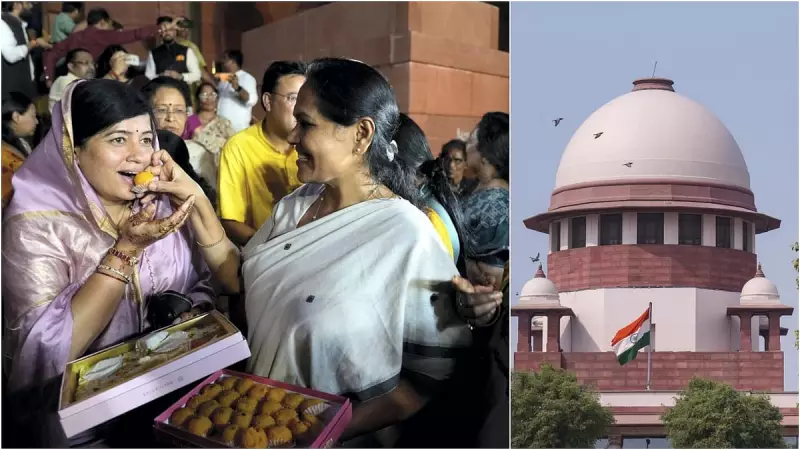
The Supreme Court of India has taken a significant step toward women's political empowerment by seeking the Central government's response on the implementation of the Nari Shakti Vandan Act. This development comes in response to a plea urging immediate enforcement of the women's reservation legislation without waiting for a fresh delimitation exercise.
Legal Push for Women's Political Representation
The apex court has formally requested the Centre to clarify its position on implementing the landmark women's reservation law. The plea, which prompted this judicial intervention, argues that the Act should be enforced promptly rather than being delayed by the lengthy delimitation process. The case was brought before the court on November 10, 2025, marking a crucial moment in India's journey toward gender equality in political representation.
Bypassing the Delimitation Hurdle
At the heart of the matter is the petitioner's contention that the Nari Shakti Vandan Act should not be held hostage to the delimitation exercise. Delimitation, which involves redrawing constituency boundaries, typically occurs after the census and could potentially delay the implementation of women's reservation by several years. The plea emphasizes that women constitute the largest minority group in the country and deserve immediate political representation.

The petitioner has presented compelling arguments for why the government should proceed with the Act's implementation without linking it to the delimitation process. This approach would ensure that women gain their rightful place in India's political landscape without unnecessary delays that could span years.
Potential Impact on Indian Politics
If the Supreme Court rules in favor of immediate implementation, it could transform the composition of India's legislative bodies overnight. The Nari Shakti Vandan Act promises to reserve one-third of seats in the Lok Sabha and state legislative assemblies for women, potentially bringing thousands of women into mainstream politics.
The court's intervention comes at a critical juncture when discussions about women's representation in Indian democracy have gained significant momentum. Legal experts suggest that this case could set important precedents for how constitutional provisions for marginalized groups are implemented in practice.
The Centre's response, which the court has now sought, will be crucial in determining the timeline for this transformative legislation. The government's position on whether the Act can be implemented independently of the delimitation exercise will shape the future of women's political participation in India for generations to come.