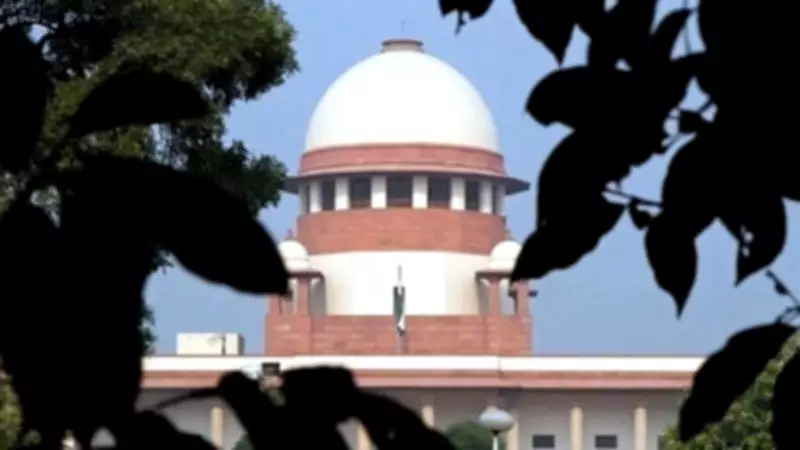
The Supreme Court on Wednesday observed that the pace of a trial in a civil suit filed in 2015 was so slow that even a snail might question its speed. A bench of Justices Sanjay Karol and N Kotiswar Singh made the remark while hearing an appeal filed by a private firm challenging a February 2025 order of the Delhi High Court.
Case Background
The suit, originally filed in 2015, pertains to a commercial dispute. The plaintiff, a private company, had approached the Delhi High Court seeking certain reliefs. However, the trial has been dragging on for over a decade, prompting the Supreme Court to intervene.
Court's Observation
“Even a snail may question the speed at which the trial is proceeding,” the bench remarked, expressing concern over the delay in the disposal of the case. The court noted that such delays undermine the faith of litigants in the judicial system.

Appeal Against High Court Order
The private firm had appealed against the Delhi High Court’s February 2025 order, which had dismissed its plea for early hearing. The Supreme Court, while hearing the appeal, directed the trial court to expedite the proceedings and conclude the trial within six months.
Impact on Judicial Efficiency
The Supreme Court’s observation highlights the persistent issue of case backlog and slow disposal rates in Indian courts. According to data from the National Judicial Data Grid, over 4.5 crore cases are pending across various courts in India. The apex court has repeatedly emphasized the need for timely justice.
The bench also noted that the delay in this case was not attributable to any party but to systemic inefficiencies. “We are not here to fix blame but to ensure that justice is delivered without unnecessary delay,” the court said.
Directions Issued
The Supreme Court directed the trial court to prioritize the matter and complete the hearing within six months. It also asked the parties to cooperate and not seek unnecessary adjournments. The court further observed that the trial judge should ensure that the case is taken up on a day-to-day basis if required.
The order is expected to set a precedent for other pending cases, reinforcing the principle that justice delayed is justice denied.