

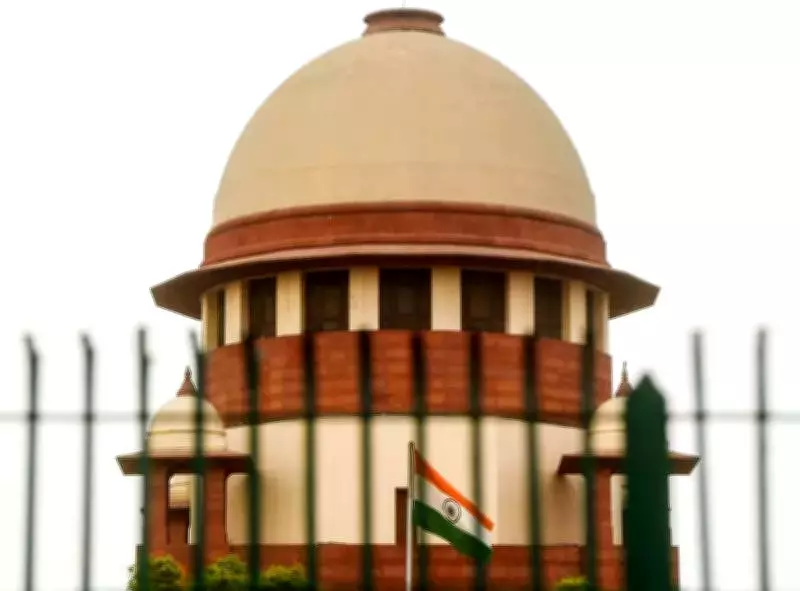
Supreme Court Ruling on SC Status Ignites Controversy Among Punjab Christians
The recent Supreme Court ruling that denies Scheduled Caste (SC) status to individuals from non-Hindu, Sikh, and Buddhist communities has elicited a spectrum of responses from the Christian community in Punjab. While some leaders decry the decision as discriminatory against Dalit converts, others highlight the inherent ethos of equality within Christianity, urging a focus on dignity beyond reservation systems.
Mixed Reactions from Christian Leaders
Jasbir Sandhu, president of the Punjab Christian Youth Fellowship in Tarn Taran district, voiced strong criticism of the ruling. He emphasized that the government lacks reliable data on conversions to Christianity, complicating the assessment of how many individuals are affected. Sandhu argued that if other castes receive quotas based on religious grounds, Christians should also be considered for inclusion in reservation benefits.
"In a democratic country, everyone has the freedom to adopt any religion," Sandhu stated, pointing out that many Christians, particularly those in border areas, originate from Dalit backgrounds. He cited historical precedents, noting that Sikh leaders like Master Tara Singh secured SC status for Sikhs, and Kanshi Ram played a pivotal role in gaining recognition for Buddhists. However, Sandhu lamented the inadequate representation of Christians in Parliament, which he believes leads to their concerns being overlooked.

"It is unfortunate that we face discrimination on the basis of religion. As Indians, Dalit Christians should be granted SC status," he asserted.
Supreme Court Decision and Its Implications
The Supreme Court's ruling explicitly states that individuals professing religions other than Hinduism, Sikhism, or Buddhism cannot be recognized as members of the Scheduled Caste. This decision has sparked a broader debate about religious equality and the criteria for SC status in India.
Alternative Perspectives Within the Community
In contrast, Kanwal Bakshi, president of the United Christian Front in Punjab, offered a different viewpoint. He described the Supreme Court decision as largely irrelevant, arguing that there is no strict measure to determine an individual's religious affiliation. "I appreciate the equal status given in Christianity," Bakshi remarked, suggesting that Christians making a fuss about the ruling should instead take pride in the equality their faith provides.
"Rather, they should feel honoured that Christianity provides them equal status," he added, encouraging the community to seek dignity beyond reservation frameworks.
Calls for Uniformity and Respect
Sukh Talwandi, another activist with the Punjab Christian Youth Fellowship, emphasized the importance of respecting all religions while questioning the consistency of the ruling. "We are free to adopt or leave any faith, but if the Supreme Court has ruled this way, it is not good for us," Talwandi said. He highlighted a perceived inconsistency: if a Dalit Sikh converts to Hinduism, they retain SC status, but Christians do not enjoy the same privilege.
"This is discrimination. The rule should be the same for all," Talwandi concluded, calling for a more uniform application of SC status criteria across religious lines.
Broader Context and Community Concerns
The debate underscores deeper issues within the Christian community regarding representation and rights. Key points of contention include:
- The lack of accurate data on Christian conversions and their socio-economic impact.
- Historical efforts by other religious groups to secure SC status, contrasted with the current challenges faced by Christians.
- The role of parliamentary representation in advocating for minority rights and addressing discrimination.
As the discussion continues, Christian leaders in Punjab are navigating a complex landscape where legal rulings intersect with religious identity and social justice. The Supreme Court's decision has not only highlighted existing grievances but also prompted reflections on the values of equality and inclusion within the community.






