Supreme Court Halts Mukul Roy's Disqualification as MLA
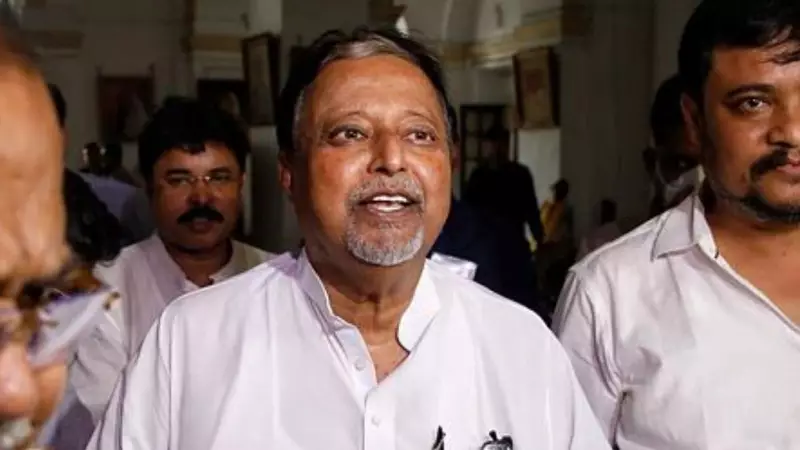
The Supreme Court of India has put a temporary hold on a Calcutta High Court decision. That decision had disqualified veteran politician Mukul Roy from his position as a member of the West Bengal Legislative Assembly.
The high court's order came under the anti-defection law. It ruled that Roy had illegally switched political parties after his election.
Legal Battle Over Defection Allegations
Mukul Roy won the Krishnanagar North seat in the 2021 West Bengal Assembly elections. He contested and won this seat as a candidate for the Bharatiya Janata Party (BJP).

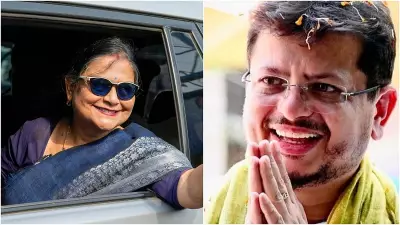
However, in June of that same year, Roy joined the ruling Trinamool Congress (TMC). This move prompted legal challenges from BJP leaders Suvendu Adhikari and Ambika Roy.
They argued that Roy should be disqualified for defecting from the party on whose ticket he was elected.
Supreme Court Questions Evidence and Procedure
A Supreme Court bench, led by Chief Justice of India Surya Kant and including Justice Joymalya Bagchi, heard the case on Friday. The bench issued a formal notice to the BJP leaders who brought the original petition.
The appeal was filed by Subhranshu Roy, Mukul Roy's son. He challenged the high court's November 2025 disqualification order. Advocate Preetika Dwivedi represented him in court.
Dwivedi argued that the Calcutta High Court overstepped its legal authority. She also noted that Subhranshu filed the petition because his father was unwell.
Debate Over Electronic Evidence Takes Center Stage
The core of the legal dispute revolves around the evidence used to prove defection. The Assembly Speaker had previously rejected petitions to disqualify Mukul Roy.
The Speaker stated that video evidence submitted by the BJP was not properly authenticated. This authentication is required under Section 65B of the Indian Evidence Act for electronic records.
The Calcutta High Court, however, took a different view. It ruled that strict adherence to Section 65B was not necessary for proceedings under the Tenth Schedule of the Constitution, which deals with anti-defection.
The Supreme Court bench expressed serious concerns about this approach. Chief Justice Surya Kant emphasized the critical importance of properly proving electronic evidence.
"Video recording is an allegation, it is not proof as per law," the bench stated clearly.
The CJI added a pointed remark about modern technology. "And in this era of artificial intelligence, God knows whose face... The rule of proving the electronic evidence has to be followed."
Legal Precedent and the Path Forward
Justice Bagchi referenced a key legal precedent. He mentioned the judgment in Arjun Panditrao Khotkar vs Kailash Gorantyal. This case is considered seminal on the admissibility of electronic evidence in election matters.
Justice Bagchi questioned the high court's logic. "Therefore, to say Section 65B should stand relaxed for the purpose of disqualification would be squarely against that judgment," he observed.
He further challenged the idea of disqualification based on a "non-traverse" or failure to deny an allegation. "For non-traverse, you will disqualify a person?" he asked.
The Supreme Court has asked the respondents to file their counter-affidavits within two weeks. Senior Advocate Gaurav Agarwal, representing the BJP leaders, urged the court not to stay the high court's order.
The bench noted the practical timeline. The current West Bengal Assembly term is set to end in about four months. Agarwal expressed concern that Mukul Roy might contest elections again if the stay is granted.
The Chief Justice responded to this concern. "If he contests as an MLA, you will move an application. We will see what needs to be done," Justice Kant assured.
Background of the Political Dispute
This case has a longer history in West Bengal politics. In 2021, Ambika Roy filed an objection when Mukul Roy was appointed chairman of the Assembly's Public Accounts Committee (PAC).
This position is traditionally held by a member of the opposition. At that time, the Assembly Speaker stated Mukul Roy was still officially a BJP member, so there was no basis for removal.

Leader of Opposition Suvendu Adhikari later filed a separate case. He argued that Roy must resign under the anti-defection laws of the Constitution's Tenth Schedule.
The Calcutta High Court initially asked the Speaker to reconsider the decision after hearing all parties. In 2022, Speaker Biman Banerjee informed the court he found no basis to dismiss Roy as an MLA based on the submitted evidence.
The legal journey has now reached the Supreme Court, which has pressed pause on the disqualification, setting the stage for further hearings.