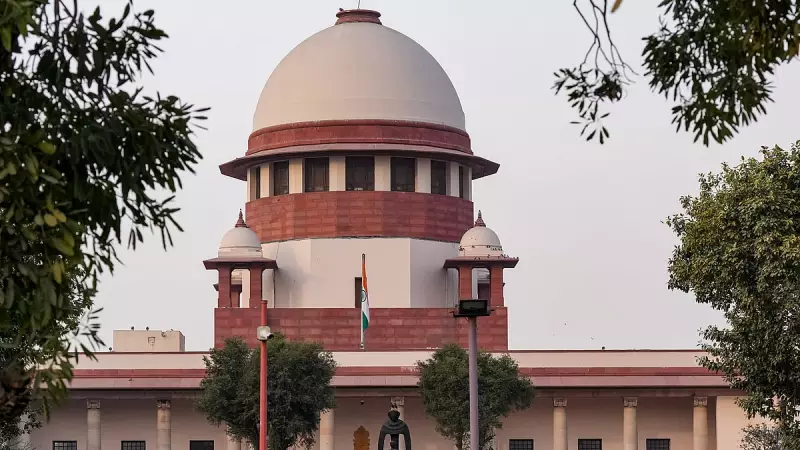
The Supreme Court of India has issued a clear directive to the Punjab government. The court told the administration led by Chief Minister Bhagwant Mann not to close down the 'Punjab Kesari' newspaper. This order comes amid serious allegations of a targeted witch-hunt against the publication.
Background of the Regulatory Action
The Punjab government recently launched a series of regulatory measures against 'Punjab Kesari'. These actions appear to be a direct response to a news article published by the newspaper. The article focused on Delhi Chief Minister and Aam Aadmi Party (AAP) leader Arvind Kejriwal.
Officials in the Punjab administration seemed particularly irked by the content of this report. The state government, which is also led by the AAP under Bhagwant Mann, initiated what many are calling a barrage of inspections and legal notices. These steps raised immediate concerns about press freedom and potential retaliation.

Supreme Court's Intervention
In a significant development, the Supreme Court stepped in to address the situation. The apex court heard arguments regarding the alleged harassment of 'Punjab Kesari'. Justices expressed concern over the possibility of the newspaper being forced to shut down due to administrative pressure.
The court emphasized the importance of a free press in a democracy. It stated that governments must not use regulatory powers to silence critical voices. The bench explicitly instructed the Punjab government to halt any action that could lead to the closure of the publication.
This judicial intervention marks a crucial moment for media rights in India. It underscores the judiciary's role in protecting newspapers from what appears to be political vindictiveness. The court's message was unambiguous: do not target media houses for publishing news that may be inconvenient to those in power.
Reactions and Implications
The case has sparked widespread discussion among political observers and media professionals. Many see it as a test of India's commitment to journalistic independence. The AAP government in Punjab now faces legal scrutiny over its handling of the matter.
Supporters of 'Punjab Kesari' argue that the newspaper was simply doing its job by reporting on a prominent political figure. They claim the state's response represents an overreach of authority. On the other hand, state officials have yet to provide a detailed public justification for their aggressive regulatory approach.
The Supreme Court's order effectively puts a temporary hold on the Punjab government's actions. It ensures that 'Punjab Kesari' can continue its operations without immediate threat of closure. However, the underlying legal and political tensions remain unresolved.
This incident highlights the ongoing challenges faced by Indian media in an increasingly polarized environment. Newspapers often walk a fine line between critical reporting and facing official backlash. The Supreme Court's directive serves as a reminder that constitutional protections for the press are still vital.
As the situation develops, all eyes will be on how the Punjab government complies with the court's instructions. The outcome could set an important precedent for future interactions between state authorities and independent journalism in India.