Amit Shah Condemns Proposed Mosque Construction in West Bengal
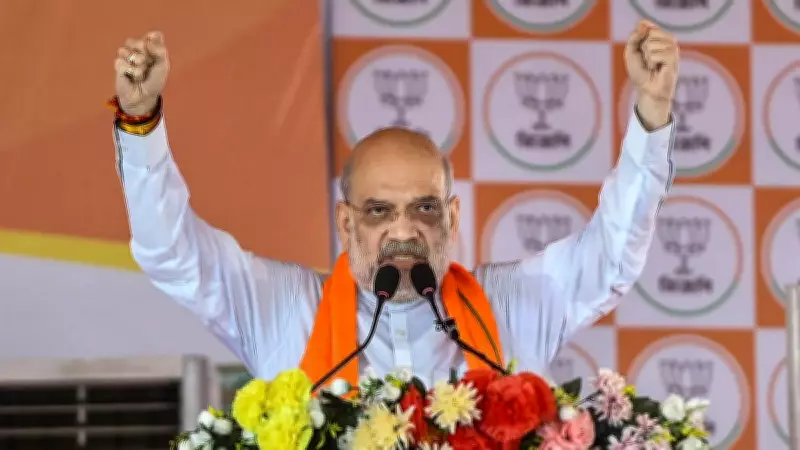
Union Home Minister Amit Shah has issued a sharp rebuke against plans for a new mosque in West Bengal, directly referencing the contentious Babri Masjid issue. Speaking on the matter, Shah asserted that no individual of integrity would consider building such a structure in the state, particularly in the lead-up to the crucial 2026 Assembly Elections.
Allegations of Political Mimicry and Electoral Strategy
Shah specifically targeted Humayun Kabir, the proponent behind the mosque project, accusing him of "taking cues" from Trinamool Congress supremo Mamata Banerjee. This accusation suggests that the proposed construction is not merely a religious initiative but a politically motivated move designed to influence voter sentiment in the highly polarized electoral landscape of West Bengal.
The Home Minister's comments come at a sensitive time, as political parties are beginning to lay the groundwork for the 2026 polls. By invoking the Babri Masjid—a symbol of long-standing religious and political dispute in India—Shah has effectively framed the issue within a broader national context, potentially galvanizing BJP's support base while challenging the Trinamool Congress's governance and policies.

Historical Context and Electoral Implications
The reference to Babri Masjid is particularly significant, given its historical resonance in Indian politics. The demolition of the Babri Masjid in 1992 and subsequent legal battles have often been leveraged in electoral campaigns to mobilize voters along religious lines. Shah's statement implies that similar tactics are being employed in West Bengal, with the proposed mosque serving as a focal point for political maneuvering.
Analysts suggest that this development could intensify the already fierce competition between the BJP and Trinamool Congress in West Bengal. The state has witnessed heated electoral battles in recent years, with both parties vying for dominance. Shah's remarks may be aimed at consolidating Hindu votes for the BJP while portraying the Trinamool as endorsing divisive policies.
Reactions and Broader Political Landscape
While Kabir and the Trinamool Congress have yet to issue detailed responses, the incident underscores the deep-seated tensions in West Bengal's political arena. The use of religious symbolism in election campaigns is not new, but Shah's explicit connection between the mosque plan and Babri Masjid raises the stakes, potentially sparking wider debates on secularism and communal harmony in the state.
As the 2026 Assembly Elections approach, such controversies are likely to shape public discourse and campaign strategies. The BJP, under Shah's leadership, appears to be positioning itself as a guardian of national integrity against what it perceives as opportunistic politics, while the Trinamool may counter by emphasizing regional autonomy and development agendas.
This episode highlights the ongoing struggle for political supremacy in West Bengal, with religious and historical narratives being weaponized to sway electoral outcomes. The coming months will reveal how these dynamics unfold and impact the democratic process in one of India's most politically vibrant states.