

Amit Shah Defends Delimitation Proposal and Women's Reservation Bill
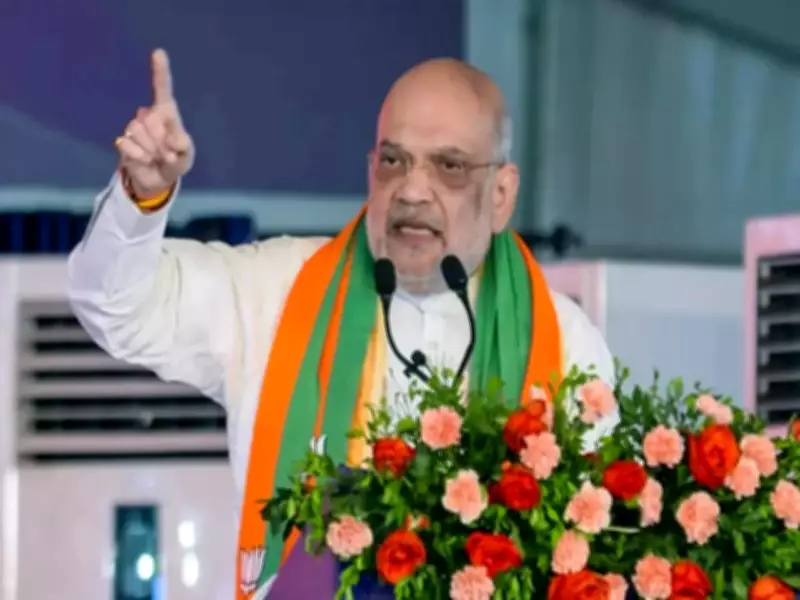
Union Home Minister Amit Shah on Friday delivered a robust defense of the government's delimitation proposal, asserting that the longstanding freeze on the number of Lok Sabha seats since 1976 contravenes the fundamental constitutional principle of "one person, one vote, one value." Speaking during the parliamentary debate on constitutional amendment bills for women's reservation and delimitation, Shah emphasized that the current electoral landscape has led to significant disparities in voter representation.
Addressing Electoral Imbalances and Opposition Concerns
Shah highlighted that the number of electors in numerous constituencies has expanded dramatically, making it challenging for a single Member of Parliament to adequately serve their seat. He pointed to the Malkajgiri Lok Sabha seat in Telangana, which boasts over 39 lakh voters, as a prime example. Furthermore, he noted that 127 constituencies across India have more than 20 lakh voters each, underscoring the urgent need for delimitation to restore equitable representation.
In response to opposition claims that delimitation would diminish the political influence of southern states, Shah firmly rejected these allegations. He clarified that, on average, Lok Sabha seats in the southern regions have far fewer voters compared to those in the north, ensuring that the process would not disproportionately affect any region.

Women's Reservation and Caste Census Clarifications
The Home Minister also addressed skepticism surrounding the women's reservation bill, dismissing accusations that it was a tactic to postpone a caste count. "Prime Minister Narendra Modi anticipated that doubts would arise, and therefore, the Union Cabinet has approved a caste census. This enumeration exercise will include a specific column for caste," Shah stated, aiming to allay concerns about transparency and inclusivity.
Shah outlined the two primary objectives behind the bills: to guarantee a time-bound implementation of women's reservation by 2029 and to genuinely uphold the "one person, one vote, one value" ideal. He warned the opposition of potential electoral repercussions if they failed to support the bill, asserting that women across the nation would hold them accountable in future elections.
Stance on Quotas and Political Criticisms
On the topic of reservations, Shah unequivocally ruled out any quota for Muslims, declaring it unconstitutional. "We will not allow anyone to implement this," he affirmed. However, regarding Other Backward Classes (OBC) quota, he expressed the BJP government's commitment to following the collective will of Parliament, emphasizing the party's dedication to broad-based representation.
Shah launched a sharp critique of the Congress party, labeling it as "the most anti-OBC party." He recounted historical instances, such as the non-implementation of the Kalelkar Commission's recommendations under Jawaharlal Nehru and Indira Gandhi's inaction on the Mandal Commission, to bolster his argument. He also contrasted this with the BJP's record, highlighting that Prime Minister Modi hails from an extremely backward caste, a milestone never achieved by Congress.
Additionally, Shah accused Congress and its INDIA bloc allies of repeatedly obstructing reservation proposals since the era of P V Narasimha Rao's government. He referenced their positions on issues like the Shah Bano verdict and triple talaq, as well as their opposition to key Modi government initiatives, including the revocation of Jammu and Kashmir's special status and the Citizenship (Amendment) Act.
Parliamentary Dynamics and Legislative Commitments
During his reply, Shah engaged directly with opposition demands. He agreed to Congress MP K C Venugopal's request to incorporate a provision ensuring a 50% increase in seats for every state into the bill. However, he swiftly rejected Venugopal's call to separate the women's reservation bill from delimitation, characterizing it as an "enticing trap" designed to delay women's quota until 2029.
The Home Minister's address concluded with a reiteration of the government's resolve to advance these constitutional amendments, framing them as essential steps toward strengthening democratic principles and ensuring fair representation for all citizens.






