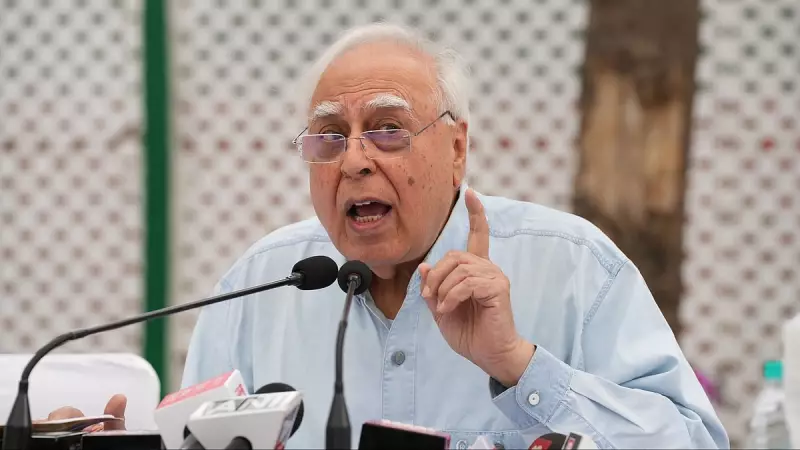
Senior Member of Parliament and former Union Minister Kapil Sibal has raised pointed questions regarding the timing of actions taken by the Enforcement Directorate (ED) against leaders of opposition parties. Sibal's remarks, made on 10 January 2026, highlight a growing political controversy surrounding the federal probe agency's perceived pattern of intensifying investigations during election periods.
Sibal's Critique of Enforcement Directorate's Timing
Kapil Sibal directly challenged the rationale behind the ED's apparent escalation of cases against political opponents when the country is in election mode. He framed this pattern as a significant departure from the practices followed during the tenure of the United Progressive Alliance (UPA) government, in which he served. The veteran politician implied that the current actions could be politically motivated, designed to create an uneven playing field during crucial democratic exercises.
Contrast with the UPA Era's Approach
Drawing a sharp contrast, Sibal asserted that the previous UPA administration, which was in power until 2014, did not engage in prosecuting political parties or their leaders based on what he termed "false information." His statement serves as a direct rebuttal to allegations often leveled by the current ruling dispensation. By invoking the UPA's record, Sibal aimed to underscore a normative standard where investigative agencies should operate independently of the electoral calendar and without partisan bias.

The core of his argument rests on the principle that law enforcement actions should be consistent and evidence-based, not peaking strategically to coincide with polls. This, he suggested, undermines the integrity of both the investigative process and the electoral democracy itself.
Political Repercussions and Ongoing Debate
Sibal's comments are set to fuel the ongoing heated debate in Indian politics concerning the alleged weaponization of central agencies. Opposition parties have consistently accused the government of using the ED, the Central Bureau of Investigation (CBI), and other bodies to target and intimidate their leaders. The government and the agencies have consistently denied these allegations, maintaining that their actions are strictly based on legal merits and available evidence.
This development adds another layer to the high-stakes political discourse as India navigates its electoral landscape. The question of institutional independence versus political influence remains a central theme, with accusations and counter-accusations likely to intensify as the country moves closer to future state and national elections. The remarks from a seasoned politician and legal expert like Sibal bring considerable weight to this critical discussion about democratic norms and the rule of law.