

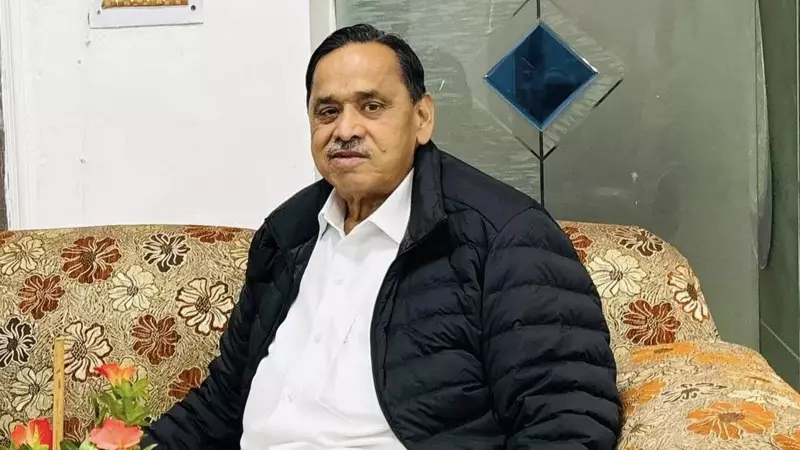
Why Naseemuddin Siddiqui's Departure Represents a Significant Setback for Congress in Uttar Pradesh
The resignation of senior Congress leader Naseemuddin Siddiqui has created substantial challenges for the party in Uttar Pradesh at a critical juncture. With the 2027 Assembly elections approaching and ongoing efforts to strengthen an alliance with the Samajwadi Party, Siddiqui's exit represents more than just the loss of an individual leader.
Immediate Leadership Response and Organizational Impact
The seriousness with which Congress leadership viewed Siddiqui's resignation became immediately apparent when AICC general secretary in-charge of Uttar Pradesh Avinash Pande and state Congress president Ajay Rai visited his residence to persuade him to reconsider. Despite these high-level efforts, Siddiqui remained firm in his decision and has since begun exploring future political options.
Party insiders acknowledge that while Siddiqui did not hold a significant formal position recently, his organizational capabilities, particularly in western Uttar Pradesh, made him a valuable asset. His grassroots approach and ability to build party structure in this crucial region now leaves a void that Congress must urgently address.

Triggers and Underlying Dissatisfaction
According to party sources, Siddiqui had been feeling sidelined for some time, with two recent incidents reportedly contributing to his decision. These included being left out during Leader of the Opposition Rahul Gandhi's visit to the state, though Siddiqui himself has denied this specific episode influenced his resignation.
In his own words, Siddiqui explained: "I was unable to work in my own style, which is grassroots-based. I did not have any significant work. For long, I felt I was unable to utilise my abilities within the Congress. I have 36 years of experience. I joined the party to contribute, but that did not happen."
Political Background and Historical Significance
Naseemuddin Siddiqui began his political career in Banda district of the Bundelkhand region and was once regarded as a close lieutenant of BSP chief Mayawati. He won his first Assembly election from Banda in 1991 and served as a minister in successive BSP governments in 1995, 1997, and 2002.
His influence peaked between 2007 and 2012 during the BSP's full-majority tenure, when he emerged as one of the most powerful ministers in the state. However, following the BSP's poor performance in the 2014 Lok Sabha elections and the 2017 Assembly polls, Siddiqui was expelled from the party along with his son on charges of "anti-party activities."
After prolonged deliberations, Siddiqui joined Congress in 2018 in the presence of then AICC general secretary Ghulam Nabi Azad and state party chief Raj Babbar. He was subsequently included in key party panels and appointed president of the Congress's western zone in 2019 after the party divided its state unit into six organizational zones.
Broader Political Implications and Future Prospects
The timing of Siddiqui's resignation creates particular challenges for Congress as it attempts to consolidate minority and Dalit support ahead of the 2027 elections. One Congress leader expressed concern: "He is a cadre-based leader. More than an individual face, he has the ability to build organization, particularly in western Uttar Pradesh. After his exit, the party will largely depend on Imran Masood as its minority face in the region. What is worrying is the signal this sends at a time when we are trying to consolidate minorities and Dalits."
Sources close to Siddiqui indicate he has been approached by multiple political parties, including the Samajwadi Party, Bahujan Samaj Party, and Aazad Samaj Party chief Chandra Shekhar Azad. Other leaders such as former minister and Rashtriya Shoshit Samaj Party chief Swami Prasad Maurya have also reportedly made approaches.
With opposition parties keen to consolidate minority, Other Backward Classes, and Dalit support ahead of the Assembly elections, Siddiqui—who claims to have the backing of over 70 influential groups across regions—has emerged as a significant political catch. His departure therefore represents not just an individual loss but a strategic setback for Congress's electoral calculations in India's most populous state.

The optics of a senior leader with substantial organizational experience leaving the party could prove difficult to manage politically, especially as Congress attempts to position itself as a viable alternative in Uttar Pradesh. The coming weeks will reveal whether Siddiqui's exit triggers further organizational realignments and how Congress plans to address the vacuum created by his departure.





