Congress Leader Singhvi Slams Rejection of Motion Against CEC, Calls It Strangulation of Democracy
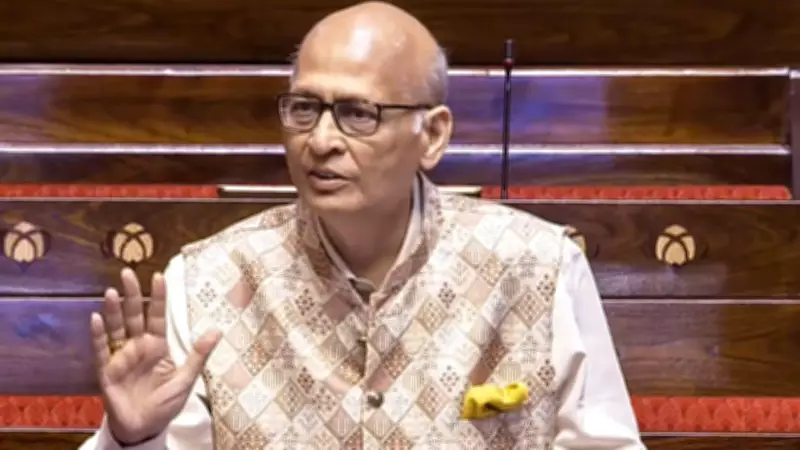
Senior Congress leader Abhishek Manu Singhvi on Wednesday launched a scathing criticism against the rejection of opposition notices seeking to move a motion for the removal of Chief Election Commissioner Gyanesh Kumar. Singhvi alleged that the decision by Lok Sabha Speaker Om Birla and Rajya Sabha Chairman Jagdeep Dhankhar to reject the notices at the very first step amounted to "strangulating" the impeachment mechanism explicitly envisaged in the Constitution of India.
Unified Opposition Front Registers Strong Objection
Singhvi was addressing a press conference where opposition parties who were signatories to the notice came together to register their collective objection. The conference saw participation from prominent leaders across the political spectrum, demonstrating a unified front against the ruling.
- Trinamool Congress (TMC) leaders Derek O'Brien and Sagarika Ghose
- Rashtriya Janata Dal's (RJD) Manoj Jha
- Aam Aadmi Party's (AAP) Sandeep Pathak
- DMK's Yogesh
- NCP-SP's Rajeev Jha
To emphasize that all opposition parties were united on this critical issue, Derek O'Brien read out the names of other parties that had signed the notice, including the Samajwadi Party (SP), Shiv Sena (UBT), and various Left parties. This show of solidarity highlighted the broad-based concern regarding the handling of the impeachment motion.

Singhvi Questions Strategy and Constitutional Overreach
When questioned about the opposition's strategy moving forward, Singhvi stated, "Whatever is permissible within the contours of law and Constitution we will do, and this will not be allowed to be resting the way it has been dealt with." However, he pointedly refused to elaborate on specific next steps or timelines, maintaining strategic ambiguity while underscoring their commitment to constitutional methods.
Singhvi contended that the presiding officers had exceeded the scope of a "prima-facie" assessment by delving into the merits of the allegations. He cited the Rajya Sabha Chairman's order as an example, highlighting that the Chairman had responded to each charge leveled by the opposition and offered his opinion, which Singhvi characterized as conducting a "mini trial."
"We are here today because when accountability is adjourned indefinitely, then democracy itself stands impeached, and that is our concern," Singhvi declared, framing the issue as fundamental to democratic integrity.
Fundamental Errors and Constitutional Concerns Raised
Dwelling on the constitutional and legal position, the Congress leader alleged that there are many fundamental errors in the orders issued by the presiding officers of both Houses of Parliament. He noted that the orders were "significantly silent on any consultation," suggesting a procedural lapse.
Singhvi elaborated on the constitutional architecture, stating, "You have forgotten that our framers, far wiser than us, created a procedure which was an adjudicatory process followed by a political process—both corrective. And you have substituted it by telescoping it into the opinion of one person—the presiding officer of each house. That is completely antithetical to the architecture that was postulated by our framers and founders with regards to impeachment."
He maintained that the Constitution provides for a detailed six-stage procedure involving:
- Initial admission of the motion
- Formation of a judicial committee
- Framing of charges
- Submission of a report
- Parliamentary discussion
- Final decision
The core problem, according to Singhvi, is that the orders of the presiding officers end everything at the very first stage itself, thereby short-circuiting the entire constitutional process.
Specific Allegations and Broader Political Implications
Singhvi further alleged that specific charges raised by the opposition were not adequately addressed in the rejection order. These charges included allegations related to electoral irregularities and delays in complying with judicial directions concerning the Election Commission.

He posed pointed questions to the ruling establishment: "If truth on the side of CEC or EC is so strong, then why fear scrutiny? If the system is so clear, then why do the majority party and all those other supporters try and bury the motion?"
Noting that this is a "very serious matter," Singhvi argued that the decision casts "a shadow on the glory of Parliament" and raises profound concerns about the ruling Bharatiya Janata Party's (BJP) willingness to allow a proper scrutiny of the Election Commission. The implication is that this episode reflects broader anxieties about institutional accountability and the health of India's parliamentary democracy.