

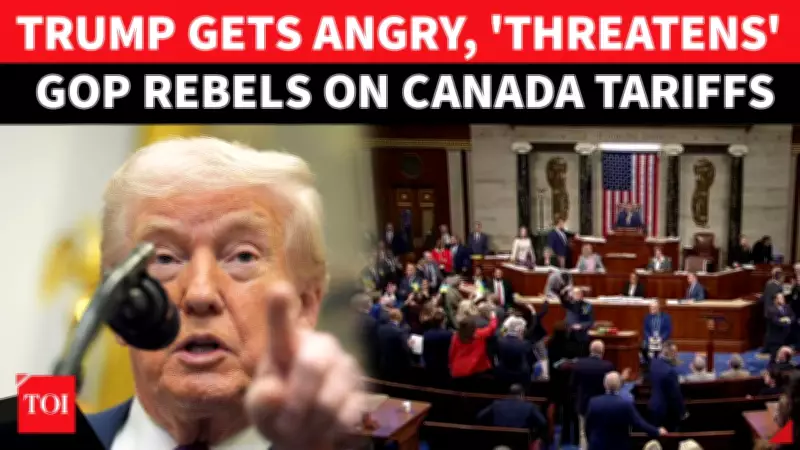
Six Republican Lawmakers Break Ranks in Historic Tariff Vote
In a stunning display of political defiance, six House Republicans crossed party lines on February 13, 2026, to advance a Democratic-led measure aimed at repealing President Donald Trump's controversial tariffs on Canada. The vote represents a significant break from party unity and White House pressure, highlighting growing economic concerns within the GOP.
Republican Defectors Cite Constitutional and Economic Grounds
The six Republicans who voted with Democrats are Representatives Thomas Massie, Don Bacon, Kevin Kiley, Jeff Hurd, Brian Fitzpatrick, and Dan Newhouse. These lawmakers publicly stated their decision was driven by serious economic considerations and a belief in Congress's constitutional authority over trade policy. Their move came despite intense lobbying from Republican leadership and direct pressure from the White House to maintain the tariffs.
This rebellion marks one of the most visible cracks in Republican support for Trump's aggressive trade agenda, which has been a cornerstone of his economic policy. The tariffs on Canada, implemented as part of broader protectionist measures, have faced criticism from various sectors for potentially harming bilateral trade relations and increasing costs for American consumers and businesses.

Trump's Swift Response and Warning of Consequences
President Trump responded immediately to the vote, issuing a stark warning about political repercussions for Republicans who oppose his tariff policies. In a statement, he vowed there would be "consequences" for those who defied his administration's trade agenda, emphasizing his expectation of party loyalty on this key issue.
The president's reaction underscores the high stakes involved in trade policy debates and his administration's determination to enforce protectionist measures despite bipartisan resistance. This incident reveals the ongoing tension between Trump's unilateral approach to trade and congressional oversight, setting the stage for potential future confrontations.
Broader Implications for U.S.-Canada Relations and Domestic Politics
The successful advancement of this measure, though still needing further legislative steps to become law, signals potential shifts in U.S.-Canada trade dynamics. It also reflects mounting concerns among some Republicans about the economic impact of tariffs and the balance of power between the executive and legislative branches.
Political analysts note that this vote could have lasting effects on intra-party dynamics, as it demonstrates a willingness among a faction of Republicans to prioritize policy concerns over strict party alignment. The outcome may influence future trade negotiations and congressional actions on similar economic policies.
As the situation develops, all eyes will be on how the White House follows through on its warning and whether other Republicans will join this emerging dissent against Trump's trade strategies. The episode adds another layer to the complex political landscape of 2026, where economic policy and party loyalty continue to collide.






