Sonowal Lambasts Congress Over UPA Era Policy Paralysis and Corruption Scandals
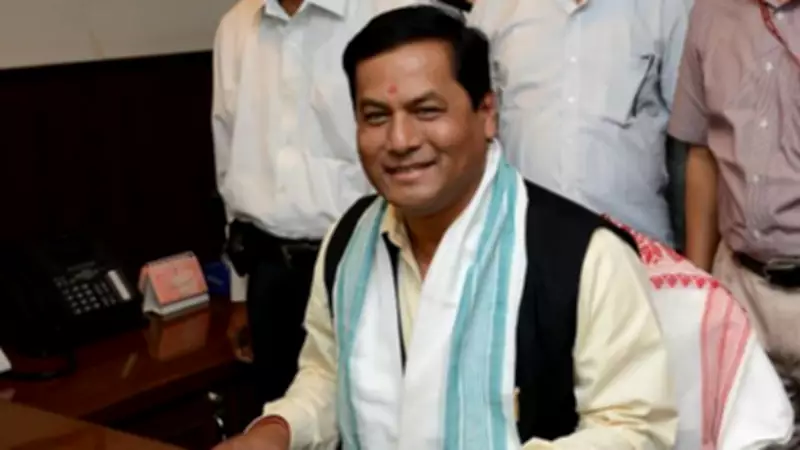
Union Ports and Shipping Minister Sarbananda Sonowal launched a scathing attack on the Congress party in the Lok Sabha on Monday, accusing the previous United Progressive Alliance (UPA) government of plunging India into an era marked by policy paralysis, rampant corruption, and governance failures. Opening the debate for the Bharatiya Janata Party (BJP) on the Motion of Thanks to the President's Address, Sonowal asserted that before 2014, the nation grappled with delayed projects, disconnected regions, and critically low national self-confidence.
Contrasting Governance: From Paralysis to Decisive Leadership
Sonowal emphasized that the 2014 general elections marked a pivotal turning point for India. "After 2014, India chose decisive leadership," he declared, highlighting the transformative shift under Prime Minister Narendra Modi's administration. He contrasted this with the UPA regime, which he described as suffering from corruption-driven governance and a lack of direction.
The Union Minister pointed to specific economic indicators to bolster his argument. He noted that inflation, which often hovered around 9% and even breached double digits during the UPA years, has been tamed to a "remarkable 4.6%" in the 2024-25 fiscal year. Sonowal praised the current government's resilience, stating that while earlier administrations used global crises as excuses for inaction, the Modi government has leveraged such challenges as catalysts for growth and reform.

Era of Scams and Neglect: Targeting Congress's Legacy
In a direct indictment of the Congress-led government, Sonowal cataloged a series of high-profile scandals that he said defined the UPA era. "Be it the 2G spectrum scam, the coal scam, or the Commonwealth Games scam," he stated, "the nation endured an era defined by scams and scandals... tarnishing India's global image." He alleged that corruption was so pervasive that middlemen often dictated policy outcomes, undermining the welfare of the common citizen.
Sonowal also accused the Congress of practicing a form of developmental bias, where regions with fewer parliamentary seats, like the Northeast, were systematically neglected. "Congress government used to cast aside the aspirations of its people," he claimed, contrasting this with the BJP's focused development push in the region over the past eleven years, which he said has brought the Northeast out of "darkness—neglected and ignored."
Legislative Reforms and Transparent Governance
The Minister highlighted recent legislative initiatives as evidence of the government's commitment to corruption-free governance. He specifically mentioned the VB—G RAM G Act, which is set to replace the Mahatma Gandhi National Rural Employment Guarantee Act (MGNREGA). Sonowal asserted that this new law would not only guarantee 125 days of employment but would also incorporate robust mechanisms to "stop corruption and leakages" in welfare delivery.
Supporting this claim, BJP MP Tejaswi Surya pointed out that even the UPA government had acknowledged significant leakages in its delivery systems, whereas the Modi administration has ensured transparency and efficiency. Surya further contrasted the Presidential addresses under both regimes, noting that UPA-era speeches frequently highlighted sluggish growth, inflation, and security concerns, while the current government's addresses celebrate India's civilizational heritage and advocate for decolonization.
Security and Social Empowerment: A New Paradigm
Tejaswi Surya also commended Union Home Minister Amit Shah for his efforts in "single-handedly uprooting Maoist terrorism," underscoring the government's success in enhancing internal security. On the social front, Surya criticized the UPA for repeatedly failing to pass the Women's Reservation Bill, while applauding Prime Minister Modi for finally enacting this landmark legislation, thereby empowering women across the nation.

In conclusion, Sonowal's speech painted a stark picture of India's journey from a period of alleged stagnation and scandal under the Congress to an era of decisive leadership, economic resilience, and inclusive development under the BJP-led government. The debate underscored the ongoing political narrative framing the 2014 elections as a watershed moment in India's contemporary history.