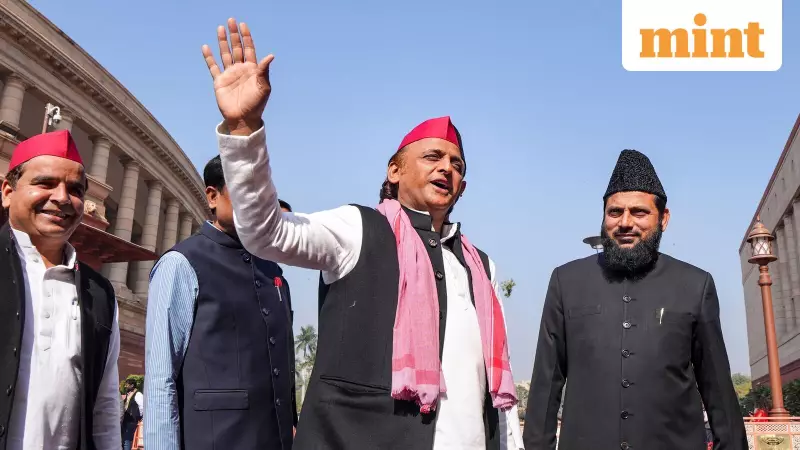
A demolition drive in central Delhi has escalated into violence and political controversy, with Samajwadi Party Member of Parliament Mohibbullah Nadvi coming under police scrutiny. The clashes erupted near the historic Faiz-e-Elahi Masjid opposite Turkman Gate during an anti-encroachment operation on the intervening night of Tuesday and Wednesday.
MP's Presence Under Investigation
According to sources quoted by news agency ANI, the Delhi Police is set to summon MP Mohibbullah Nadvi to join the investigation. Five individuals have already been arrested in connection with the incident. Police sources allege that Nadvi, who is also the Imam of the Parliament Street mosque, was present at the spot before the violence broke out.
Officials claim that despite repeated requests by senior police officers to leave, the MP from Uttar Pradesh's Rampur constituency remained in the vicinity. However, Joint Commissioner of Police (Central Range) Madhur Verma provided a nuanced detail to PTI, stating, "In a preliminary investigation, it has come to light that he was present there, but had left by the time the demolition began. This is being investigated."

Violence Erupts Over Mosque Demolition Fears
The situation turned violent following a social media post that claimed the Faiz-e-Elahi mosque was being demolished. This triggered a gathering of 150 to 200 people at the site in the Ramlila Maidan area. The crowd began pelting stones and glass bottles at police personnel and Municipal Corporation of Delhi (MCD) workers engaged in the drive.
Five police officers were injured in the assault, including the area's Station House Officer (SHO). To control the mob, police used force and lobbed tear gas shells. The law enforcement action led to the arrest of four adults, the apprehension of one juvenile, and the detention of 10 to 15 other individuals.
Aftermath and Historical Echoes
The incident has drawn immediate parallels to the infamous Turkman Gate demolitions of the 1970s, a dark chapter in Delhi's history. The current anti-encroachment drive, intended to clear illegal structures, has instead highlighted deep-seated tensions and the potent role of misinformation spread via social media.
The focus of the probe now extends beyond the immediate perpetrators to the role of public figures present at the scene. The investigation led by Delhi Police will determine the sequence of events and any potential instigation, with MP Nadvi's actions forming a critical part of the inquiry. The case underscores the delicate balance between urban enforcement and community sentiment in densely populated historical areas of the national capital.