Subhas Chandra Bose's Enduring Bond with Lucknow During India's Freedom Movement
The city of Lucknow shares a profound and multifaceted connection with the legendary freedom fighter Subhas Chandra Bose, a relationship that became vividly apparent through his extensive engagements with nationalists, students, and ordinary citizens throughout the struggle for independence. This bond is etched into the historical fabric of the city through pivotal events, personal interactions, and preserved archival records.
The Foundation of the Indian Independence League in Lucknow
One of the earliest and most significant steps in Bose's association with Lucknow occurred in April 1928 during the All Parties Conference held in the city. It was here that the Indian Independence League was formed, initiated by young nationalists who boldly rejected the Congress demand for Dominion Status, instead advocating for complete independence for India. Bose, alongside prominent leaders like Jawaharlal Nehru and S. Srinivasa Iyengar, strongly supported this radical demand. While he later led a volunteer corps at the 1928 Calcutta Congress session, the founding of the Indian Independence League in Lucknow firmly established the city's crucial role in the freedom movement, marking it as a hub of revolutionary thought.
Personal and Political Milestones in the City
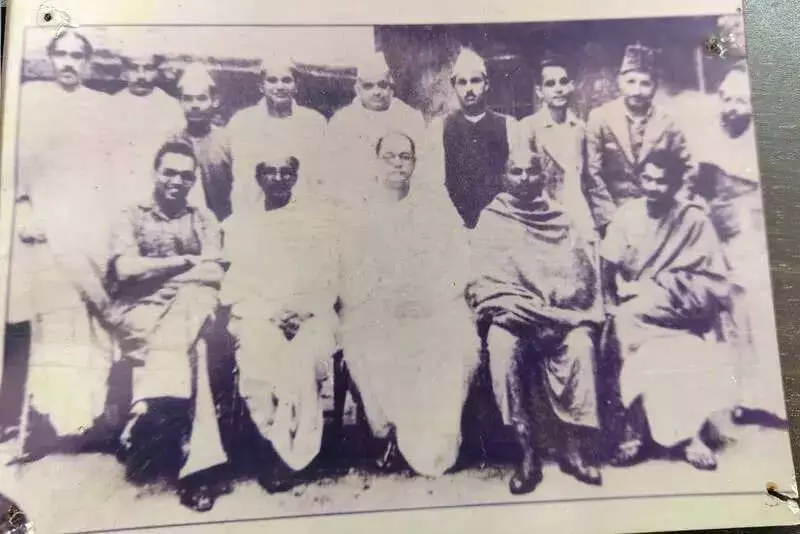
Bose's next significant link with Lucknow emerged in the early 1930s when, while under police custody and battling tuberculosis, he was admitted to Balrampur Hospital for medical treatment, as documented in The Selected Works of Subhas Chandra Bose Volume 2. Another defining moment followed on November 20, 1938, after his election as the Congress president, when he received a red carpet welcome at the Bengali Club. "Soon after Netaji was elected the Congress president, the Bengali Club hosted him. He was also presented with an honorary letter written in Bengali, which is still available on the Club's website along with his famous photograph at the club," said Bengali Club president Arun Banerjee.

He added, "Captain Ram Singh and Lt Colonel SK Vardhan, both from Lucknow, who later became part of the Indian National Army were present to meet Netaji. Oral history tells us that Captain Ram Singh played the violin when he arrived. When Netaji visited the Bengali Club, nearly a thousand people had gathered to welcome him." This event highlighted the deep admiration and support Bose commanded among the local populace.
Inspiring the Youth and Academic Community
According to historians, Bose also left an indelible mark on students at Lucknow University. Eager to hear his speeches despite strict British censorship, students ingeniously smuggled radios into their hostels to catch every broadcast. Later, they personally invited him to the campus, turning his visit into a defining moment in the city's nationalist history. Bose's most celebrated appearance came in 1939 after he launched the All India Forward Bloc, a faction carved out within the Indian National Congress. Hundreds gathered at LU's Malviya Hall, then known as Bennett Hall, to welcome him.
For nearly half an hour, the campus resonated with chants of 'Netaji Zindabad', but over the next two hours, a pin-drop silence prevailed as Bose addressed the crowd in refined and fluent English. During this visit, Netaji stayed at the residence of Prof NK Sidhanta, then LU's dean of the faculty of arts. He also addressed a massive public meeting at Jhandewala Park in Aminabad. "Oral history suggests that the crowd at Jhandewala Park stretched up to the Aminabad crossing. When he raised the Inquilab Zindabad slogan, it was heard clearly up to Aminabad," said Prof Aroop Chakravarti, former head of the medieval and modern Indian history department at LU.
It was here that Bose made a historic statement, declaring, "India will not adopt a constitution designed by foreigners. We will make our own constitution." According to oral history and reports, the code phrase 'Today there will be a party line' signaled significant updates. When news arrived that the INA had reached Kohima, the LU campus erupted in jubilation, with students boldly proclaiming that it would not be long before India had its own government in Delhi, showcasing the infectious spirit of hope Bose instilled.

Preserving Bose's Legacy Through Archival Treasures
Lucknow continues to preserve Bose's legacy through valuable archival records. The Uttar Pradesh State Archives holds a letter written by Subhas Chandra Bose to Jitendranath Ghosh dated June 30, 1937. Another rare possession at the Archives is a 275-page logbook of the INA, donated in 1975 by Radhey Shyam Sharma, who was the director and secretary of the Swatantra Senani Sangram Samiti. This logbook contains letters and writings of Bose, along with historic photographs, serving as a tangible link to his revolutionary activities and enduring influence in the region.
These accounts collectively underscore how Lucknow was not merely a backdrop but an active participant in Bose's journey, fostering nationalist fervor and preserving his memory for future generations.