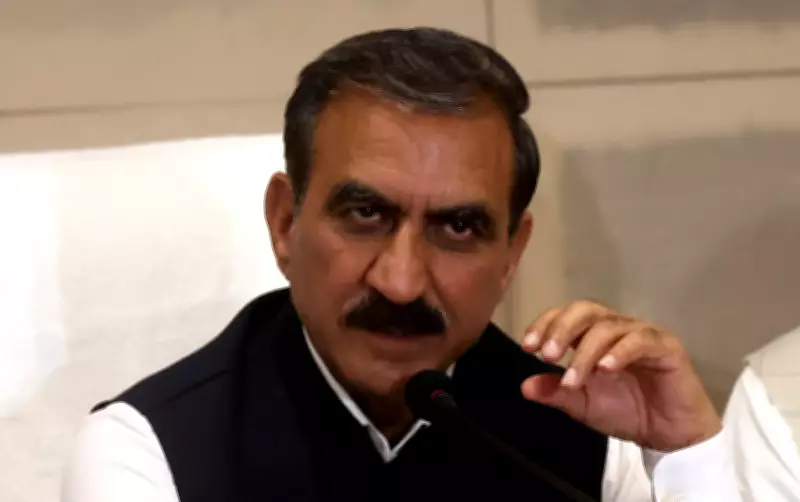
Himachal CM Sukhu Leads Martyrs' Day Tribute and Protest Fast Against MGNREGA Changes
Himachal Pradesh Chief Minister Sukhvinder Singh Sukhu, along with senior Congress leaders, marked Martyrs' Day with solemn tributes to Mahatma Gandhi followed by a symbolic protest against recent changes to the rural employment guarantee scheme.
Floral Tributes and Political Protest at Ridge Ground
On Friday, at the historic Ridge Ground in Shimla, Chief Minister Sukhvinder Singh Sukhu led Congress leaders in paying floral tributes to Mahatma Gandhi on his death anniversary, observed nationwide as Martyrs' Day or Shaheed Diwas. The ceremony brought together prominent political figures including Congress Himachal Pradesh in-charge Rajni Patil, Deputy Chief Minister Mukesh Agnihotri, and State Congress President Vinay Kumar.
Following the tribute ceremony, the gathering transformed into a political protest as participants observed a two-hour fast. This symbolic action was specifically organized to voice strong opposition against what Congress leaders describe as the renaming and systematic dilution of the Mahatma Gandhi National Rural Employment Guarantee Act (MGNREGA).

Allegations of Scheme Dilution and Power Centralization
Chief Minister Sukhu expressed grave concerns about the current state of MGNREGA, accusing the BJP-led Union government of undermining the scheme's fundamental principles. "The government has not only changed the name but has also attacked the very spirit of MGNREGA," Sukhu stated during the protest.
The Chief Minister highlighted several specific concerns regarding the scheme's implementation:
- Reduced employment opportunities for rural youth and women compared to previous years
- Removal of powers from village pradhans who previously could initiate local development works
- Diminished local employment generation that previously allowed people to work near their homes
- Weakening of unemployment allowance provisions that were guaranteed under the original scheme
Sukhu emphasized the scheme's historical significance, noting that "for twenty years, MGNREGA guaranteed employment and provided unemployment allowances when work wasn't available." He particularly highlighted the scheme's crucial role during the COVID-19 pandemic, when it provided maximum employment opportunities to rural populations.
Broader Political Context and Agricultural Concerns
The protest occurred against a backdrop of broader political tensions between the Congress-ruled state government and the central administration. During the event, Chief Minister Sukhu also addressed agricultural concerns specific to Himachal Pradesh, revealing that he had raised the issue of apple import duties in discussions with Union Minister Piyush Goyal.
"Any reduction in import duty on apples from New Zealand would seriously harm our apple growers," Sukhu warned, connecting local agricultural interests to larger questions of economic policy and federal relations.
Symbolic Resistance and Political Messaging
The two-hour fast served as both a memorial observance and political statement, combining reverence for Mahatma Gandhi's legacy with contemporary policy criticism. By choosing Martyrs' Day for this protest, Congress leaders sought to connect Gandhi's principles with their concerns about social welfare schemes.
The event demonstrated the continuing political significance of MGNREGA in Indian politics and highlighted the ongoing tensions between state and central governments regarding social welfare implementation. As rural employment remains a critical issue in Himalayan states like Himachal Pradesh, such protests underscore the deep political divisions surrounding economic policy and social justice initiatives.