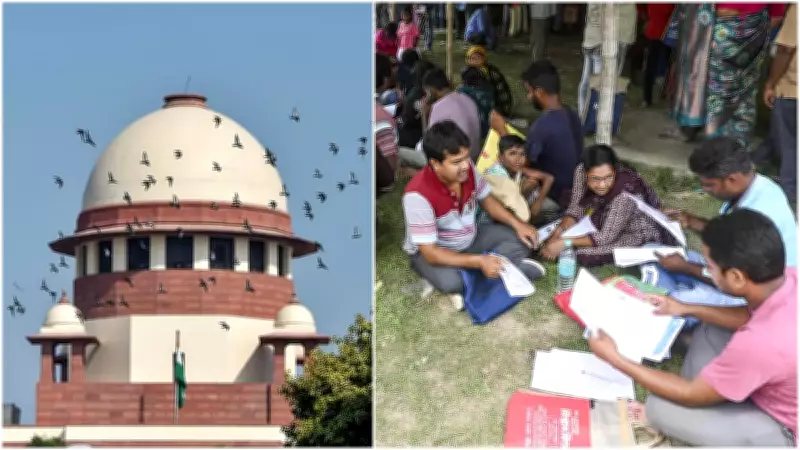
The Supreme Court has upheld the Election Commission's (EC) authority to conduct a Special Intensive Revision (SIR) of electoral rolls, declaring the exercise as 'valid and non-arbitrary'. A bench of the apex court stated that the EC is undertaking this exercise to ensure free and fair elections, which is a cornerstone of democratic governance.
Background of the Case
The matter reached the Supreme Court after challenges were raised against the EC's decision to carry out a special revision of electoral rolls. Petitioners argued that the process could lead to the deletion of eligible voters and was conducted without proper safeguards. However, the court dismissed these concerns, emphasizing the EC's constitutional mandate to maintain accurate and updated electoral rolls.
Court's Observations
The bench noted that the SIR exercise is not arbitrary but follows a structured procedure. It said that the EC has the power to conduct such revisions under Article 324 of the Constitution, which vests the superintendence, direction, and control of elections in the Election Commission. The court further observed that the SIR is a continuous process aimed at purifying the electoral rolls and ensuring that only eligible voters are enrolled.

Key highlights of the judgment:
- The EC's power to conduct SIR is derived from constitutional provisions and statutory rules.
- The exercise is non-arbitrary as it follows established guidelines and provides opportunities for objections and claims.
- Free and fair elections require accurate electoral rolls, and the SIR helps achieve this objective.
Implications for Electoral Integrity
The judgment reinforces the EC's autonomy in electoral management. By upholding the SIR, the Supreme Court has strengthened the mechanism for maintaining clean electoral rolls, which is critical for preventing electoral fraud and ensuring that every eligible citizen can exercise their franchise. The decision also sets a precedent that the EC's administrative actions, when taken in good faith and within legal bounds, will not be easily interfered with by courts.
Reactions and Next Steps
Political parties and civil society groups have reacted cautiously to the verdict. While some welcome the clarity on the EC's powers, others have called for greater transparency in the revision process to avoid any misuse. The EC has stated that it will continue the SIR exercise as planned, with adequate public notice and grievance redressal mechanisms in place.
In conclusion, the Supreme Court's ruling affirms the Election Commission's role as a robust institution capable of conducting electoral roll revisions independently, thereby upholding the democratic process in India.