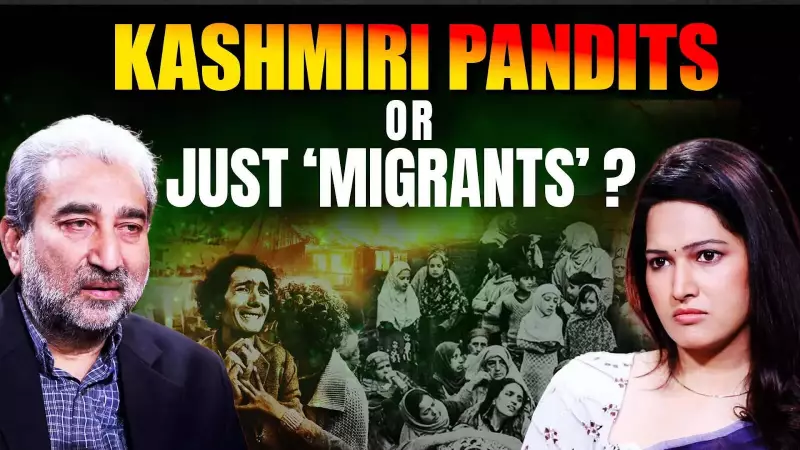
Prominent activist and voice of the displaced Kashmiri Pandit community, Sushil Pandit, recently delivered a powerful address, dissecting the complex and enduring challenges facing the region. His remarks, made on December 30, 2025, centered on the recent terrorist attack in Pahalgam, the ongoing plight of Kashmiri Pandits, and the contentious national policies of the Citizenship Amendment Act (CAA) and the abrogation of Article 370.
The Pahalgam Attack and a Community's Lingering Trauma
Pandit began by addressing the fresh wounds inflicted by the recent attack in Pahalgam. He highlighted how such incidents of violence reverberate deeply within the Kashmiri Pandit community, reopening the scars of their traumatic exodus in the early 1990s. He emphasized that each attack reinforces their collective insecurity and casts a long shadow over any prospects of a safe and dignified return to their homeland.
He framed the attack not as an isolated event but as a symptom of the persistent security challenges that continue to plague the Kashmir Valley. For Pandits living as migrants in their own country, such events are a stark reminder of the volatile conditions that forced them to flee, complicating discussions about rehabilitation and resettlement.

Migration, Identity, and the Citizenship Amendment Act
Delving into the core of the Kashmiri Pandit migration issue, Pandit spoke of their decades-long struggle to preserve their unique cultural and religious identity while living in displacement. He described a community caught between the memory of their homeland and the reality of life as migrants, fighting to keep their traditions alive for future generations born in exile.
On the Citizenship Amendment Act (CAA), Pandit shared his perspective on its potential implications for displaced communities, including Hindus from neighboring countries. While acknowledging the act's intent to provide refuge to persecuted minorities, he sparked debate by questioning its direct relevance and utility for the internally displaced Kashmiri Pandits, whose primary demand remains justice, rehabilitation, and the right to return to a secure Kashmir.
Article 370 Revocation: Political Shift and Social Impact
A significant portion of his address was devoted to analyzing the aftermath of the revocation of Article 370 in August 2019. Pandit discussed the profound effects this constitutional change has had on Kashmir's social fabric and political landscape. He examined the government's narrative of full integration and development against the ground realities of continued security operations and a locked-down political space.
His remarks ignited a broader debate on governance, minority rights, and community rehabilitation in the region. He questioned whether the political change had tangibly improved the sense of safety and belonging for the Kashmiri Pandit community or if it remained an unresolved geopolitical maneuver with uncertain human consequences.
Broader Implications and Unresolved Questions
Pandit's comprehensive analysis brought to the fore critical questions about the future of Kashmir. He connected the dots between security concerns, migrant issues, and policy debates, arguing that a lasting solution must address the humanitarian crisis of displacement alongside the geopolitical objectives. The community's struggle, as he portrayed it, is emblematic of the larger quest for justice, dignity, and peaceful coexistence in one of India's most sensitive regions.
His speech underscored that the Kashmiri Pandit story is far from over. It remains a poignant chapter in India's contemporary history, intertwined with national policies like the CAA and the decision on Article 370, demanding continuous attention and a compassionate, sustainable resolution from policymakers and civil society alike.